Cellular grouting is a lightweight, engineered flowable fill made from Portland cement, water, and preformed foam. Superior Grouting has custom-designed and placed cellular grout — also called cellular concrete, lightweight cellular concrete (LDCC), CLSM, or flowable fill — for Texas and Louisiana Gulf Coast pipeline abandonment, annular space grouting, load-reducing backfill, and void filling projects since 1983. Densities range from 30 to 90 PCF, with compressive strengths from 50 PSI to over 1,000 PSI, pumpable up to 5,000 feet from the mix point. Call (281) 894-4175 for a project-specific estimate.

Underground Utility Line
Oil & Gas Pipeline Abandonment
Load Reducing Backfill
Concrete Structures
Dams, Levees & Bulkheads
Erosion Control





Cellular grout is an alternative name for
. Cellular concrete is a type of controlled low strength material (CLSM). CLSM generally refers to flowable fill or mix designs specifically formulated for relatively low, but predictable, strengths. The “cellular” in cellular grout refers to the preformed cellular concrete foam used to generate the material. Instead of sand and stone aggregate, Low Density Cellular Controlled Low Strength Material has uniformly distributed air bubbles. Sometimes sand is used, but it’s at much lower quantities per cubic yard than traditional CLSM. This lowers unit weight significantly. Foaming is done either through truck batching or continuous generation, making this ideal for top cellular grouting in Houston projects that require lightweight, cost-effective solutions. For projects where the challenge is active water intrusion rather than filling volume, we specify chemical grouting for soil stabilization and leak sealing to close the pathway at its source.
On-site Footprint — Small and compact
Mobility — Our team can move easily between locations
Cleanliness — Minimal waste and clean-up
Responsiveness — Multiple crews means we are quick to respond
At Superior Grouting, we understand that when it comes to pressure grouting, there are different types of cellular grout available. Depending on your project's specific needs, you may require either pervious or non-pervious material.
When it comes to backfill and cellular grouting, we have the expertise to get the job done right. We understand the importance of density of lightweight grout and its impact on your project's success.
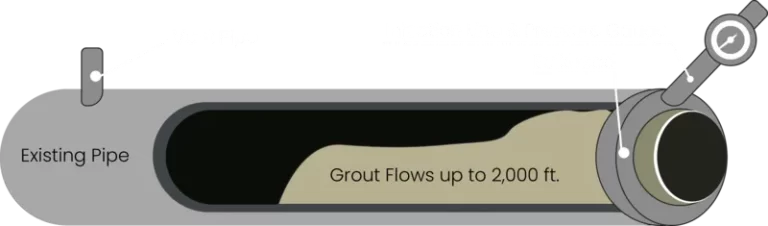
The annular space between the carrier and the host pipe must be filled with the right type of cellular grout. By using cellular grout, the grout is considerably lighter than sanded grout while still maintaining its strength.
One crucial factor we consider when using cellular grout is deflection. Our team of experts knows how to prevent deflection from causing damage to your project by selecting the correct mix design. We pride ourselves on our commitment to providing top-quality service and solutions to our clients, saving them time and money while ensuring safety and reliability for the best cellular grouting in Houston projects.
Don't hesitate to reach out to us for more information or to request a quote, especially if you're curious about cellular grouting cost. Let us show you how our unique solutions can help address your grouting challenges and provide value to your project.
These three terms are often used interchangeably in the construction industry, but they refer to overlapping (not identical) materials. Here's how they relate:
|
Term |
What It Is |
Typical Density |
Typical Strength |
Best For |
|
Flowable Fill |
Self-compacting backfill — any cement-based slurry that flows into place without mechanical compaction |
100-140 PCF (sand-cement) / 30-90 PCF (cellular variants) |
50-300 PSI for non-structural fill |
Utility trench restoration, void fill, abandoned pipe filling |
|
CLSM (Controlled Low-Strength Material) |
Same as flowable fill — formal ACI / ASTM specification name for engineered low-strength backfill (typically ≤ 1,200 PSI by ACI 229R definition) |
100-140 PCF (standard) / 30-90 PCF (cellular variants) |
50-300 PSI typical; up to 1,200 PSI max |
Same as flowable fill; CLSM is the standards-body term |
|
Cellular Grout / Cellular Concrete |
Lightweight subset of CLSM — Portland cement + water + preformed foam (no aggregate or low sand content) |
30-90 PCF |
50-1,000 PSI (density-dependent) |
Load-reducing backfill, long-distance pumping, pipeline abandonment, annular space grouting |
The short version: Cellular grout IS flowable fill IS CLSM — but cellular grout specifically means the lightweight (30-90 PCF) variants that use foam instead of sand for low unit weight. Traditional sand-cement flowable fill is heavier and not pumpable over long distances; cellular grout solves both problems.
When specifying for utility, pipeline, or load-reducing applications in Houston, cellular grout is typically the right choice because it pumps thousands of feet at low pressure and adds minimal dead-load to underlying soils or retained structures.

At Superior Grouting, we understand that when it comes to Pressure Grouting Services, our clients have specific needs and concerns. That's why we offer a range of Cellular Grouting Services, including the use of Lightweight Cellular Grout and Cellular Cement. There are two primary drivers for using this innovative material: Load Reduction and Placement Characteristics.
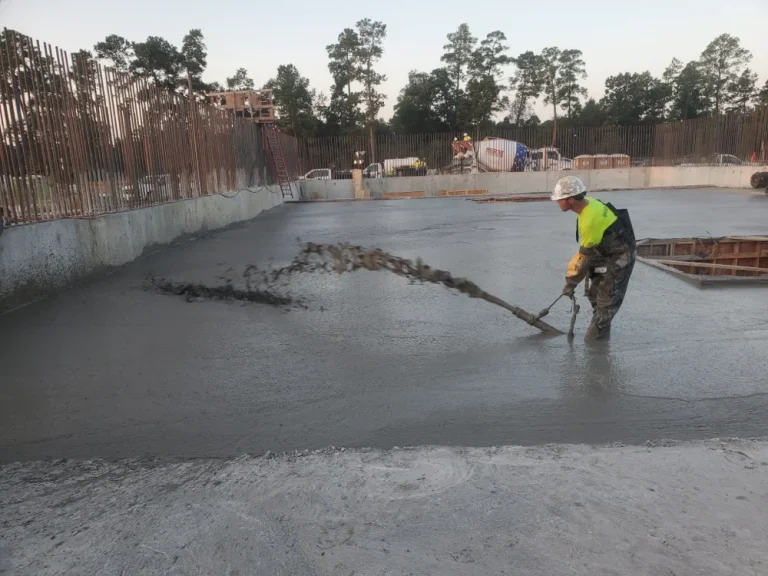
On the Lightweight side, Cellular Concrete is ideal for Load Reduction. Alongside this, slurry grouting is another technique that can be considered depending on the project requirements. Typical lightweight mass fills are installed around 30 lbs/cuft, making them a great solution for projects where weight is a concern.
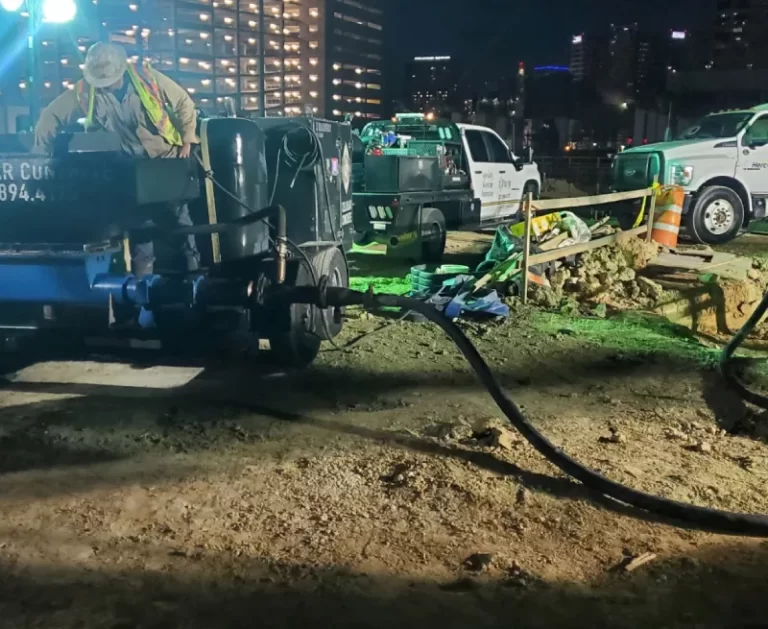
Low Density Cellular Concrete (LDCC) can be used for load reducing backfill to reduce overburden and evenly distribute loads over poor soils. LDCC offers significant advantages in projects that require lightweight fill.
Load reducing fills are commonly used in
like the following:
Densities can be varied from 30 to 90 PCF and compressive strengths from 50 to 900 PSI. In addition, it is also available in a pervious or impervious formulation. Mix design can be specialized for specific location and geomaterial behavior, making LDCC an excellent choice for cellular grout projects in Houston that need lightweight, cost-effective solutions.
On the Placement Characteristics side, Cellular Grout is used due to its Lower Density, flowability and unique economic benefits. It can be pumped very far (thousands of feet) at very low pressures, which makes it perfect for Utility Grouting Applications. This facilitates annular space grouting and abandonments of much longer runs compared to traditional grout materials.
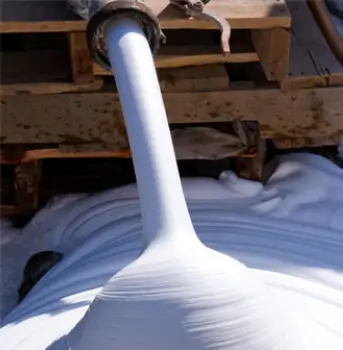
We understand that every project is unique, which is why we offer customized solutions to fit your specific needs. Our team of experts has extensive experience in using Lightweight Cellular Grout in a variety of applications.
Type J Backfill plays a crucial role in pipeline bedding and utility trench restoration, especially in applications where a general-purpose fill is acceptable. It is widely used when the surrounding excavated soil meets certain geotechnical limits but doesn't qualify as "select" or engineered backfill. The backfill is compacted in layers to meet design densities and is subject to inspection to exclude materials such as large stones, organic matter, or construction debris.
In conjunction with cement stabilized backfill, J-type materials can be employed to improve trench performance in areas of variable moisture content or inconsistent subgrade. This combination is especially valuable in annular grouting where trench stability, backfill compaction, and long-term settlement control are critical.
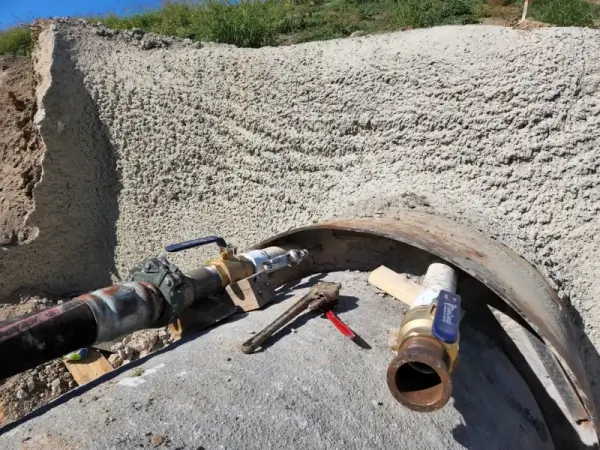
When working with cellular grout and considering mix designs, a cardinal rule is that as density decreases, so does strength. In some instances, such as the material needing to be excavated later, the loss of strength is a benefit. An additional benefit is that as the material becomes lighter, its thermal and acoustic insulating properties increase as well. A very basic cellular grout mix design would consist simply of Portland cement, water, and externally generated foam, which is also referred to sometimes as preformed foam. The water-cement ratio can typically vary from 0.40-0.80, and the foam content is commonly as high as 80%, depending on desired density.
Compared to heavier grouts, cellular concrete is lightweight and highly fluid, resulting in the following advantages:
Controlled Low-Strength Material (CLSM), also known as flowable fill, controlled density fill (CDF), or unshrinkable fill, is a self-compacting and highly flowable material widely used in annular grouting. It is designed for non-structural support applications, providing a reliable backfill solution that eliminates the need for mechanical compaction. With a typical compressive strength range of 50 to 300 PSI, CLSM remains strong enough to provide stability while allowing for future excavation if needed.
Superior Grouting provides specialized tunnel contact grouting services, delivering solutions tailored to meet complex project requirements. Our microtunnel contact grouting projects ensure structural stability, particularly at critical termination points such as underwater retrieval tunnels. Superior Grouting utilizes microfine cements or chemical grouts to effectively fill fine voids, stabilize surrounding ground conditions, and protect infrastructure.
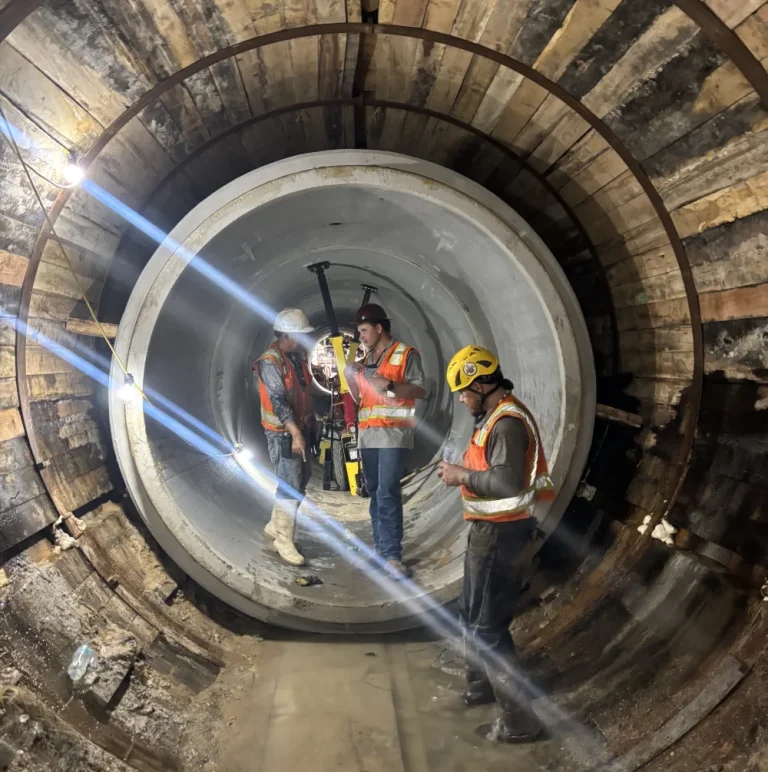
Our tunnel contact grouting approach includes:
Superior Grouting’s expertise ensures reliable contact grouting in tunnel environments, reducing risks and enhancing structural integrity.
At Superior Grouting, we specialize in providing top-quality Pressure Grouting Services for government agencies and large corporations in Houston and other near areas. We work with owners and contractors to develop project solutions that meet their unique needs.
Our neat mix cellular grout is generated using a straight slurry with a water-to-cement ratio of 0.50-0.70. We blend the slurry grouting onsite with pre-formed foam, either in a ready mix truck or in-line, depending on the project volume and other constraints. Our foaming agent requires no consolidation, which saves time and money while ensuring safety and reliability.
Cellular concrete typically ranges from 30 lb/cuft wet cast density up to around 90 lb/cuft, providing strengths from around 50 PSI to greater than 1,000 PSI. Density is infinitely variable within that range, and there is a relatively linear relationship between density and compressive strength. Our relatively common mixes are 40 PCF, 45 PCF, and 55 PCF. We use 30 PCF wet cast density for maximum load reduction. In areas where low unit weights are required, and buoyancy can't be balanced by overburden, we use pervious cellular grout. For pipe abandonments, annular space grouting, and other utility-related work, we use the relatively common mix of 45 PCF.
At Superior Grouting, we are committed to providing our clients with the best solutions to their unique problems. Contact us today at (281) 894-4175 for more information or to request a quote.

Sanded mixes are used to economically achieve high wet cast densities. The base slurry for sanded cellular grout consists of around 2,000 pounds of sand per cubic yard, 600 pounds of cement and around 800 pounds of water.
A limitation of using sanded mixes is flowability; sanded cellular concrete can't be pumped nearly as easily as neat mix cellular concrete. When specifying cellular grout, it's best to leave the mix design up to the specialty contractor. Typically, specified characteristics are a wet cast density that's +/- 135 lb/cuft, and with strengths ranging from 800-2000 PSI at 28 days.
Cellular grout is an engineered Portland cement slurry combined with precise amounts of density-controlled foam. The Portland cement slurry and foam are mixed producing a lightweight mixture containing uniformly distributed air cells. In its rigid form it can be thought of as cement-based grout having air as the aggregate. Density can be varied from 30-90 lb/ft³. Compressive strength ranges from 50 to 1,000 PSI are available. Cellular grouting is becoming more and more commonly used and accepted within the engineering and construction community as a technology for filling voids. Some relevant applications include but are not limited to: line abandonment, annular space grouting, contact grouting, annulus space grouting, decommissioning and abandonment of underground tanks and structures, load reducing backfill and voided slab fill.
Cellular grouting cost in Houston typically falls into these ranges:
|
Project Type |
Typical Cost Range |
Notes |
|
Small utility trench / void fill |
$400 - $2,500 per project |
Small mobilization |
|
Annular space grouting (single pipe segment) |
$3 - $15 per linear foot |
Depends on diameter and grout density |
|
Pipeline abandonment (cellular grout fill) |
$8 - $50 per linear foot |
Larger diameters; bigger volume |
|
Load-reducing backfill behind retaining wall |
$80 - $400 per cubic yard |
Custom mix design |
|
Large void fill / commercial application |
$5,000 - $50,000+ |
Per project, by volume |
Cost factors include: required density (30-90 PCF), required compressive strength (50-1,000 PSI), pump distance (longer pumps = larger setup), access (interior vs exterior), and total project volume. Cellular grout is typically more cost-effective than traditional sand-cement backfill when the project requires long-distance pumping, lightweight fill, or access through small openings — the lower mobilization cost and reduced excavation/compaction labor more than offset the per-cubic-yard material price.
For a project-specific estimate, contact Superior Grouting at (281) 894-4175.
40+ years of annular and abandonment grouting since 1983
Density range: 30 PCF (max load reduction) → 90 PCF (high-strength fill)
Compressive strength: 50 PSI to over 1,000 PSI (density-dependent)
Common mixes: 40 PCF, 45 PCF, 55 PCF — with 30 PCF for maximum load reduction
45 PCF is the standard mix for pipe abandonments and annular space grouting
Pumpable up to 5,000+ feet at low pressure
Cellular grout work performed for: Port of Houston Authority, Colonial Pipeline, U.S. Army Corps of Engineers, Houston Airports, City of Houston, Burlington Northern Railroad, major Gulf Coast petrochemical clients
CSI Code 31 43 13 (Cementitious Pressure Grouting)
ASTM D4832 (CLSM Compressive Strength) + ASTM D6023 (CLSM Density) compliance
ACI 229R "Controlled Low-Strength Materials" guideline compliance
Texas + Louisiana Gulf Coast service area: 11 cities
Call (281) 894-4175 for project-specific estimates and mix design submittals.
Superior Grouting provides annular grouting, annular space grouting, pipeline abandonment, slip-lining annular fills, duct bank grouting, and contact grouting services across:
Call (281) 894-4175 to discuss a project in your area.
Since 1983, Superior Grouting has been a pressure grouting contractor working with various government agencies, large businesses, and corporations. For years, Superior Grouting has been in charge of these customers' specialized pressure grouting and concrete remediation needs.











































Cellular grouting is a lightweight, engineered flowable fill made from Portland cement, water, and preformed foam. Instead of using sand or stone aggregate, cellular grout contains uniformly distributed air bubbles that reduce its unit weight. Densities range from 30 to 90 PCF, with compressive strengths from 50 PSI to over 1,000 PSI. Cellular grout is also called cellular concrete, lightweight cellular concrete (LDCC), CLSM (Controlled Low-Strength Material), or flowable fill.
These terms describe overlapping materials. Flowable fill is any cement-based slurry that flows into place without mechanical compaction. CLSM (Controlled Low-Strength Material) is the formal ACI/ASTM standards-body name for the same category, typically capped at 1,200 PSI compressive strength. Cellular grout is the lightweight subset — Portland cement + water + preformed foam (no aggregate or low sand content), with densities from 30-90 PCF. All cellular grout is flowable fill and CLSM; not all flowable fill or CLSM is cellular grout.
CLSM is used as a non-structural backfill that flows into place and self-compacts. Typical applications include utility trench restoration, abandoned pipe filling, void filling under slabs and pavements, load-reducing backfill behind retaining walls, bridge approach slab backfill, annular space grouting around slip-lined pipes, and tunnel liner backfill. CLSM is preferred over compacted soil where mechanical compaction is impractical or where future excavation is required (CLSM at 50-300 PSI remains excavatable).
Cellular grouting cost in Houston typically ranges from $80 to $400 per cubic yard depending on density, compressive strength, pump distance, and project size. Annular space grouting around utility pipes runs $3 to $15 per linear foot. Pipeline abandonment with cellular grout runs $8 to $50 per linear foot for larger diameters. Smaller utility trench or void-fill projects start around $400 per project. Contact Superior Grouting at (281) 894-4175 for a project-specific estimate.
Cellular grout density ranges from approximately 30 PCF (pounds per cubic foot) for maximum load reduction up to 90 PCF for high-strength fill applications. Density is infinitely variable within that range, and compressive strength scales approximately linearly with density (from about 50 PSI at the low end to over 1,000 PSI at the high end). Superior Grouting's most common mixes are 40 PCF, 45 PCF, and 55 PCF, with 45 PCF being the standard for pipe abandonments and annular space grouting.
Cellular grout typically reaches initial set within 6-12 hours of placement and achieves design compressive strength within 7-28 days, depending on mix design, ambient temperature, and density. Lower density mixes (30-40 PCF) generally cure slower than denser mixes. For most utility and backfill applications, cellular grout is firm enough to walk on within 24 hours and can be back-loaded with light surface traffic within 3-7 days.
Common applications include: pipeline abandonment (cellular grout fills the abandoned pipe to prevent collapse); annular space grouting (filling the gap between a host pipe and a slip-liner); load-reducing backfill behind retaining walls; void fill under sunken slabs or pavements; bridge approach slab backfill; tunnel liner backfill; trench backfill where weight or settlement is a concern; abandonment of underground tanks and structures; and erosion control fills. Superior Grouting also performs cellular grout work for utility and DOT contractors across Houston, the Texas Gulf Coast, and Louisiana.
Yes — lower-strength cellular grout (in the 50-300 PSI range) is designed to be excavatable using standard mechanical equipment or hand tools, which is why it's preferred for utility trench restoration where future excavation may be required. Higher-strength cellular grout (over 500 PSI) becomes progressively harder to excavate. When excavatability is a project requirement, specify a maximum 28-day compressive strength of 300 PSI or less.
Cellular grout can be pumped over 5,000 feet from the mix point at low pressure — far longer than traditional sand-cement backfill. The combination of low unit weight (30-90 PCF vs 100-140 PCF for sand-cement) and high flowability dramatically reduces the pump pressure required. This makes cellular grout the preferred material for long-distance utility grouting, pipeline abandonment, and difficult-access fill where standard backfill would require many more access points.
The terms are used interchangeably in most of the industry. Both refer to a Portland cement and water slurry combined with preformed foam (or chemically generated foam) to create a lightweight cementitious material with uniformly distributed air cells. "Cellular concrete" is more common in U.S. construction specifications (especially CLSM and flowable fill contexts); "foamed concrete" is more common in international and structural-lightweight-concrete contexts. Both have density ranges of 20-120 PCF and strengths from 50 to over 2,000 PSI depending on mix design.

“Thank you for helping us before the break, you guys have been great to work with!! Ross did a great job communicating and coordinating."
“Great to see a subcontractor where everyone is wearting their PPE! Thank you for that."
“Wow, you made that look easy. Thank you so much for helping us through this nightmare. You guys are great!!"
“Thanks for your help and pulling us out of a very sticky situation. Your guys ROCK!"
“Your crew knew exactally what to do and how to coordinate things. Shout out to Martin & Paul, tell them thanks! "
“Couldn't have done it without you!! Thanks"
“They called it good, thanks for your fast response. I'll call you on the next one."
“We have worked with Ron since 1997 helping him grow his business. Superior is a company that you know is going to be successful for the long haul. Their attention to customer service, quality of workmanship and their ability to find creative solutions to see that the job is done right the first time is what makes them a great company!"
“Thank you for a job well done, The attention to detail by Andy and Octavio is praise worthy. Companies build their name based on the quality of their people this is evident. The product performed as indicated, or better than expected, look forward to years of good performance and remaining leveled. To the entire staff, thank you for a job very well done”
“Superior Grouting used injectable foam to fix my cracked concrete. At the same time they lifted various parts of the concrete to even out the surfaces. They were FANTASTIC. On-time, hard-working, clean, precise – everything you want in a contractor. Their pricing was more than fair and their work speaks for itself. I highly recommend anyone using injectable foam for foundations, or lifting any kind of uneven surface to call Ron or Erica at Superior.”
“Great work performed by Andy and Octavio, they stuck around until the work was done it was almost 2200 as they wrapped things up. Professional, courteous and a great attention to detail, most companies build a great name based on the quality of their people and these guys demonstrated it. The product worked amazingly well during installation, it was a dramatic improvement with almost no damage. I am looking forward to seeing how well it will perform in years to come."
“I wasn’t even expecting the job to turn out as good as it did honestly? It exceeded my expectations way above and beyond better! You guys are truly the best!”
“Very friendly, knowledgeable, and efficient service. Crew explained the process and cleaned up after the work was finished. Very professional team.”

Superior Grouting is Houston's specialty cellular grouting and CLSM contractor. Call (281) 894-4175 or email sales@superiorgrouting.com for a project-specific estimate.