


Polyurethane Grouting Limitations: Understanding What Foam Injection Cannot Do
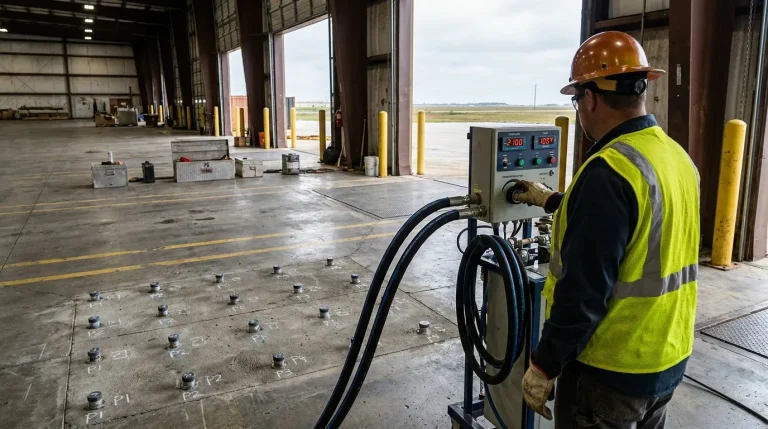
Polyurethane grouting excels at void filling, infiltration control, and slab stabilization, but it is not a universal repair method. Its limitations include lower compressive strength than cementitious grout, thickness and volume constraints tied to exothermic curing, sensitivity to soil and moisture conditions, and defined service-life boundaries. Method selection should follow site-specific engineering evaluation.
Most published content on polyurethane grouting catalogs its advantages: rapid cure, low viscosity, minimal disruption, precise placement. Fewer sources address the boundaries. That gap matters, because a grouting material applied outside its performance envelope does not fail gradually. It fails on schedule, at the owner's expense.
This article defines where polyurethane grouting performs, where it does not, and which conditions should move a project toward a cementitious or compaction-based alternative. The intent is not to discourage the method. It is to support disciplined method selection, the step that separates a durable repair from a repeat mobilization.
Where Polyurethane Grouting Fits Among Injection Methods
Polyurethane grouting is a form of chemical injection in which a two-component resin, a polyol and an isocyanate, reacts in place to form an expanding foam or gel. The reaction is fast, typically seconds to minutes depending on formulation and temperature, and the cured grout bonds to soil, concrete, and steel. Because the resin enters the ground at low viscosity, it penetrates fractures and pore space that cement grout cannot reach.
Contractors deploy polyurethane grouting across a defined set of applications:
- Filling voids beneath slabs, pavements, and approach structures
- Stabilizing loose or washing subgrade soils around utilities and below foundations
- Controlling water infiltration through joints, cracks, and penetrations in below-grade structures
- Lifting and re-leveling settled concrete in warehouses, terminals, and industrial facilities
Two resin families govern behavior in wet conditions. Hydrophobic resins repel water and cure to a dense, closed-cell foam. Hydrophilic resins absorb water into the reaction and cure to a flexible gel suited to joint sealing. Selecting the wrong family for the moisture condition is one of the most common specification errors in the field.
The method matters more than the material. A correctly selected resin injected without pressure control, sequencing, or verification still produces an unreliable result.
Structural and Load-Bearing Limitations
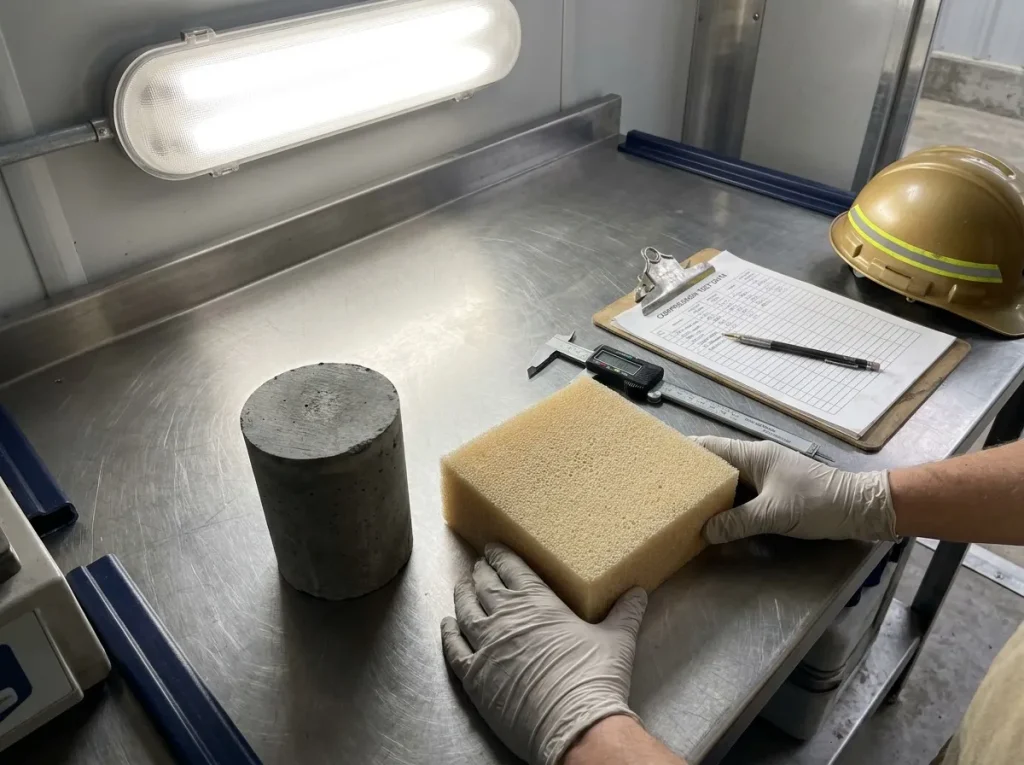
Polyurethane foam is a stabilization and void-filling material, not a structural substitute for concrete. Cured densities typically range from 3 to 10 lb/ft³ for lifting foams, with compressive strengths from roughly 40 to 150 psi depending on density and confinement. Cementitious grout, by comparison, routinely develops 1,000 to 4,000 psi or more.
That difference defines the boundary. Polyurethane distributes loads by restoring uniform bearing beneath a slab or structure. It does not replace footings, piles, or structural underpinning where the failure mechanism is inadequate foundation capacity rather than voided or loosened soil.
| Property | Polyurethane Grout | Cementitious Grout | Reference Standard |
| Compressive strength | ~40-150 psi (density dependent) | 1,000-4,000+ psi | ASTM D1621 / ASTM C942 |
| Cured density | 3-10 lb/ft³ (lifting foams) | 100-140 lb/ft³ | ASTM D1622 / ASTM C138 |
| Cure to service | Minutes to hours | Hours to days | Manufacturer data / ASTM C191 |
| Placement viscosity | Low, penetrates fine voids | Higher, flow-limited | ASTM D4878 / ASTM C939 |
| Long-term creep under sustained load | Requires evaluation at high loads | Minimal at design strength | ASTM D2990 |
Deep-seated settlement is the second structural boundary. When the compressible zone extends well below slab level, shallow foam injection treats the symptom. Densifying the soil mass through compaction grouting addresses the mechanism, because low-mobility grout displaces and compacts loose soil at depth rather than filling the void nearest the slab.
Sustained heavy loads deserve explicit analysis. Rack legs, crane rails, and tank ring walls impose long-duration stresses where foam creep behavior, not short-term compressive strength, governs performance. The engineer of record should confirm foam suitability against the actual load case before injection is specified.
Depth, Volume, and Thickness Constraints
The polyurethane reaction is exothermic. Heat generated during cure dissipates slowly from thick masses, and excessive lift thickness can scorch the foam core, degrade cell structure, and reduce strength. Manufacturers publish maximum lift or thickness guidance for each formulation, and injection sequencing must respect it. Large placements proceed in staged lifts with cooling intervals, which extends schedule.
Volume is the related economic constraint. Polyurethane resin is priced as a specialty chemical. Filling a large void or abandoned structure with foam costs multiples of what a flowable cementitious fill costs per cubic yard. For bulk void filling, cellular grouting delivers controlled low density at a fraction of the material cost, with polyurethane reserved for final adjustment or water cutoff where it earns its price.
Practical constraints compound with depth:
- Injection pressure must stay below overburden and structural limits, and confirming grout travel at depth requires closer port spacing and more instrumentation
- Verification becomes indirect, relying on pressure and volume records rather than visual confirmation
- Drilling access, casing, and standoff requirements increase mobilization cost
None of these constraints disqualifies the method. They define the envelope inside which it is economical and verifiable.
Soil and Site Conditions That Limit Performance
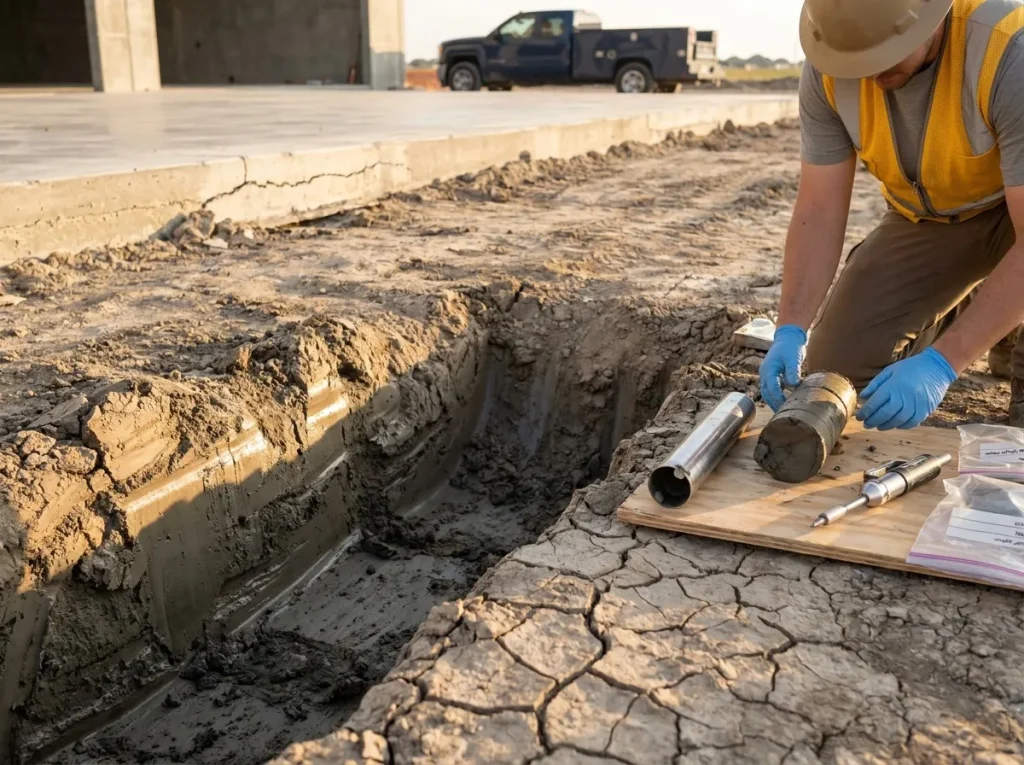
Ground conditions govern polyurethane performance more than any other variable. Four conditions warrant particular caution.
Fat clays and expansive soils. Low-permeability clay resists resin permeation. Injection in expansive clay also does not address the underlying shrink-swell mechanism, so seasonal movement continues unless moisture conditions are managed. Gulf Coast projects encounter this profile constantly, and it is a primary reason method selection starts with geotechnical data.
Organics and contaminated ground. Organic soils compress under load regardless of void filling, and some contaminants interfere with resin chemistry or raise environmental handling requirements under EPA and state regulations.
Flowing water. Hydrophobic resins tolerate wet conditions, but actively flowing water can wash resin from the target zone before gel time is reached. Fast-set formulations and staged injection manage this, yet high-velocity flow paths may first require a curtain grouting program or a cementitious cutoff.
Temperature extremes. Resin reaction rates are temperature dependent. Cold substrates slow cure and extend gel time beyond design assumptions, while high ambient temperatures shorten working time. Field procedures must confirm material conditioning and adjust catalyst ratios accordingly.
Where these conditions dominate, permeation-type chemical grouting with sodium silicate or acrylate systems, compaction grouting, or cementitious methods may match the mechanism better than polyurethane. The comparison is what separates good practice from standard practice.
Longevity, Degradation, and Environmental Limits
Properly formulated and properly installed polyurethane grout is a long-service material. Buried, confined, and protected from ultraviolet exposure, cured foam is chemically stable, and published research on polyurethane-based grouting materials documents decades of serviceable performance in geotechnical applications, as summarized in the peer-reviewed literature such as the Polymers journal review of polyurethane grouting materials.
Degradation risk concentrates in specific exposures:
- Ultraviolet light breaks down exposed foam surfaces, so any foam visible at joints or spall faces requires a protective coating or sacrificial cover
- Sustained chemical exposure to strong solvents, acids, or hydrocarbons can attack some formulations, which matters in industrial containment and pipeline environments
- Cyclic movement at working joints can exceed the elongation capacity of rigid foams, where flexible hydrophilic gels are the correct class
- Incomplete mixing or off-ratio injection during installation is the most common cause of premature failure, which is a workmanship limitation rather than a material one
Potable water infrastructure adds a regulatory boundary. Any resin injected in contact with drinking water must carry NSF/ANSI 61 certification, and AWWA guidance governs the surrounding rehabilitation work. Confined space entry for injection inside structures falls under OSHA 29 CFR 1910.146, with SDS-driven handling controls for both resin components.
Matching the Method to the Problem
A disciplined selection process treats polyurethane as one tool in the injection portfolio of a grouting company, not the default answer. The sequence is consistent:
- Define the mechanism: void, loosened soil, infiltration, settlement at depth, or a combination
- Establish constraints: loads, access, moisture, chemistry, downtime tolerance, and budget
- Match the material class to the mechanism, then confirm against manufacturer limits and the governing standard
- Specify verification: injection logs, pressure and volume records, elevation monitoring, and post-injection testing
Facility owners and engineers evaluating a specific slab, structure, or infiltration problem can request a project assessment to determine whether polyurethane, cellular, compaction, or a combined program fits the conditions. Superior Grouting has applied that selection discipline on commercial, industrial, and public infrastructure across Texas and Louisiana since 1983.
This guidance is advisory. Final design parameters, pressure limits, and material specifications must be confirmed by the engineer of record and validated against project-specific geotechnical, structural, and regulatory conditions.
Key Takeaways
- Polyurethane grouting is engineered for void filling, soil stabilization, infiltration control, and slab lifting, not for structural underpinning or high sustained loads.
- Foam compressive strength of roughly 40-150 psi serves bearing restoration; it does not replace 1,000+ psi cementitious grout where structural strength governs.
- Exothermic cure limits lift thickness, and material cost makes foam uneconomical for bulk void filling compared with cellular grout.
- Fat clays, organics, flowing water, and temperature extremes all reduce performance and may point to compaction or chemical grouting instead.
- Buried foam resists degradation for decades, but UV exposure, aggressive chemistry, joint movement, and off-ratio installation shorten service life.
- Method selection should start from the failure mechanism and geotechnical data, with engineer-of-record confirmation before injection.
Conclusion
Polyurethane grouting earns its place in infrastructure repair by doing specific jobs quickly and precisely. It loses that value the moment it is specified for a mechanism it cannot address. Document the assumption, verify the result, and let the site conditions, not the product literature, select the method.
Superior Grouting brings four decades of method-selection discipline to commercial and industrial projects across Texas and Louisiana. Call (281) 894-4175 to discuss whether foam injection fits your site conditions.
Schedule a site evaluation today.
Request a method selection review.