


When Does Combining Grouting Methods Make Sense?
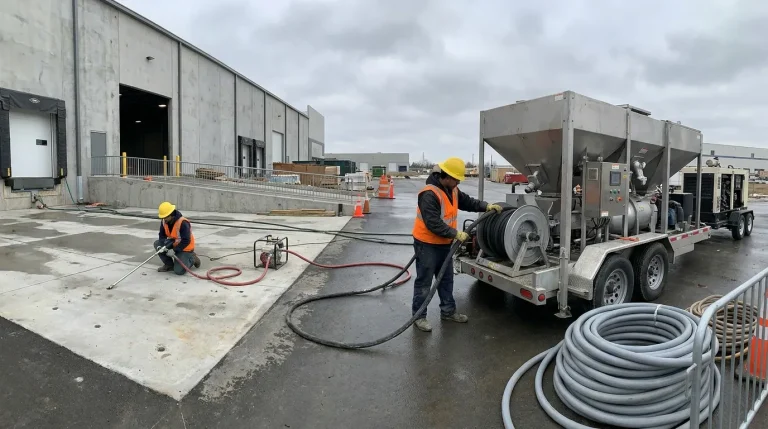
Combining grouting methods makes sense when a site has more than one problem, such as large voids, loose soil and a settled slab, and no single material can solve all of them well. The usual approach assigns each method to the condition it handles best, then sequences the work so that each stage prepares the ground for the next.
Introduction
Most grouting projects begin with a single visible symptom, such as a sunken loading area, a cracked equipment pad or water entering a below-grade structure. Once the site is investigated, that symptom often turns out to have several causes working together, including washed-out voids, weak soil at depth and a slab that has lost contact with its subgrade. A single technique can address one of those causes, but rarely all of them at once.
Combining grouting methods allows each condition to be treated with the material designed for it. A qualified pressure grouting contractor looks at the whole soil and structure profile, decides which methods are needed, and then plans the order in which they are applied. This article explains when multiple grouting techniques are justified, which pairings are most common, and how sequencing and verification keep a multi-method project under control.
Why a Single Method Is Not Always Enough
Every grouting material has a working range where it performs best and a set of conditions where it struggles. Polyurethane foam lifts slabs precisely but is not an economical way to fill a cavity the size of a room. Cellular grout fills large voids at low weight but cannot lift a slab or densify loose sand. Compaction grout densifies soil at depth but is not intended to seal active water infiltration.
The mismatch becomes costly when one method is stretched beyond its range to avoid mobilizing a second crew or material:
- Filling large voids with polyurethane: material consumption rises quickly and the cost can exceed a cementitious alternative several times over.
- Lifting with cementitious grout alone: heavier material and larger injection holes make fine elevation control difficult on thin or cracked slabs.
- Densifying soil with foam: polyurethane injected into loose granular soil fills near-surface voids but does not improve deeper bearing layers.
- Ignoring water: placing structural fill while groundwater is still moving through a joint or crack can wash out material before it sets.
A site investigation and, where appropriate, a formal geotechnical investigation reveal how many of these conditions exist and where. That information turns the method choice into an engineering decision rather than a preference for whichever material the crew knows best.
How Each Grouting Method Contributes
Before discussing combinations, it helps to be clear about what each method is designed to do. The table below summarizes the primary role, typical material behavior and common governing references for the methods most often used together on commercial, industrial and public works sites.
| Method | Primary Role | Material Behavior | Reference Standard |
|---|---|---|---|
| Compaction grouting | Densifies loose soil and increases bearing capacity at depth | Low-mobility cementitious grout that displaces soil | ASCE/G-I 53 compaction grouting guideline |
| Cellular grouting | Fills large voids and annular spaces with lightweight material | Foamed cementitious fill at low density and low pressure | ASTM C495, ASTM C796, ASTM C869 |
| Polyurethane grouting | Lifts, levels and stabilizes slabs and fills near-surface voids | Expanding structural foam with rapid cure | ASTM D1621, ASTM D1622 |
| Chemical grouting | Seals water paths and stabilizes granular soil by permeation | Low-viscosity grout that gels in soil pores or cracks | Project specification and manufacturer data |
| Cementitious void fill | Fills large voids where weight is not a concern | Flowable cement-based grout or flowable fill | ACI 229R for CLSM |
Each method answers a different question about the site. Compaction grouting services answer whether the ground can carry the load, void fill and cellular materials answer whether the space beneath the structure is fully supported, and polyurethane answers whether the surface is back at the correct elevation. Chemical methods answer whether water is still moving where it should not.
Common Combinations and When to Use Them
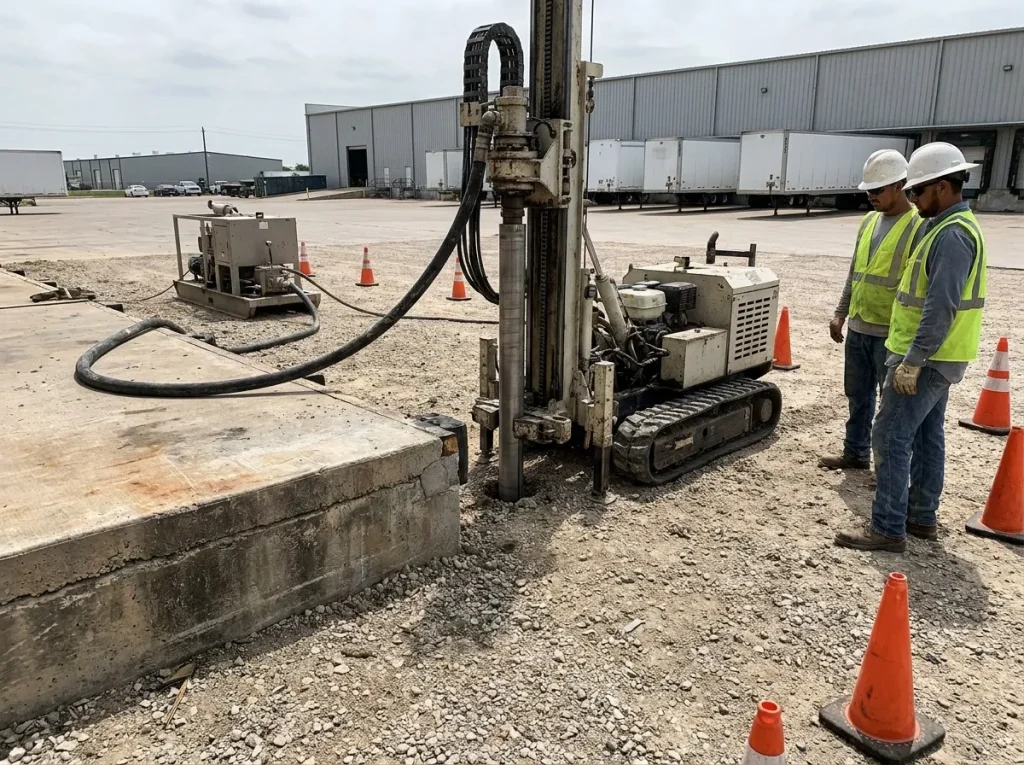
Most multi-method projects follow a small number of proven pairings. Each one matches a sequence of site conditions that appears repeatedly in industrial facilities, public infrastructure and pipeline corridors.
Cellular Void Fill Followed by Polyurethane Lifting
This pairing suits slabs and pavements sitting over large washout cavities, where filling the whole void with foam would be wasteful. Lightweight cellular concrete fill goes in first at low pressure to restore bulk support without adding significant load to weak soil. Once the cellular material has set, polyurethane is injected through a finer hole pattern to close the remaining gap and bring the slab back to grade.
Compaction Grouting Followed by Polyurethane Lifting
When settlement comes from loose or weak soil several feet below the slab, lifting the surface alone treats the symptom rather than the cause. Compaction grouting densifies the deeper layers first so the ground can carry the load, and polyurethane is then used for final leveling and to fill any shallow voids created as the soil moved. We compared these two methods in more detail in our look at how polyurethane and compaction grouting compare.
Chemical Grouting Followed by Structural Fill
Below-grade structures, manholes and tunnels with active infiltration often need the water stopped before voids behind the wall can be filled. Chemical grout injection seals the water path or creates a barrier in the surrounding soil, and cementitious or polyurethane material then fills the voids that the water created.
Cementitious Fill with Polyurethane Undersealing
For very large voids where weight is not a concern, such as abandoned structures under yards and access roads, flowable cementitious fill provides economical bulk volume. Polyurethane then underseals the pavement or slab above it where precise contact and lift are required.
| Site Condition | First Method | Second Method | Why the Order Matters |
|---|---|---|---|
| Large void under a settled slab | Cellular grout | Polyurethane | Bulk support first, fine lift last |
| Loose soil at depth plus surface settlement | Compaction grouting | Polyurethane | Stable ground before surface correction |
| Active infiltration plus voids behind a wall | Chemical grout | Cementitious or polyurethane fill | Water must stop before fill can set |
| Very large void under pavement | Cementitious fill | Polyurethane undersealing | Economical volume, then precise contact |
Sequencing and Coordination on Multi-Method Projects
The order in which methods are applied is as important as the choice of methods themselves. Grouting done out of sequence can undo earlier work, for example when compaction grouting heaves a slab that was already leveled, or when a lightweight fill is placed before water has been controlled and then washes out.
A workable sequence for a multi-method project generally follows this logic:
- Control water: stop active infiltration so later materials can set in place.
- Stabilize depth: densify or permeate weak soil where the design calls for it.
- Fill bulk voids: place cellular or cementitious fill to restore general support.
- Adjust the surface: use polyurethane for final lift, leveling and contact.
- Verify and document: survey, test and record the result against the acceptance criteria.
Coordination also depends on cure and hold times between stages. Cementitious and cellular materials need time to set before injection pressures from the next stage are applied nearby, while polyurethane cures quickly and is usually last. Holding points should be written into the plan so field crews do not shorten them to keep the schedule moving.
Each stage also changes the conditions that the next stage works in. Injection pressures, hole spacing and volumes for later work should be reviewed against what the earlier stages actually achieved, and final design parameters for each method should be confirmed by the engineer of record for the project.
How Combined Methods Apply on Industrial and Public Sites
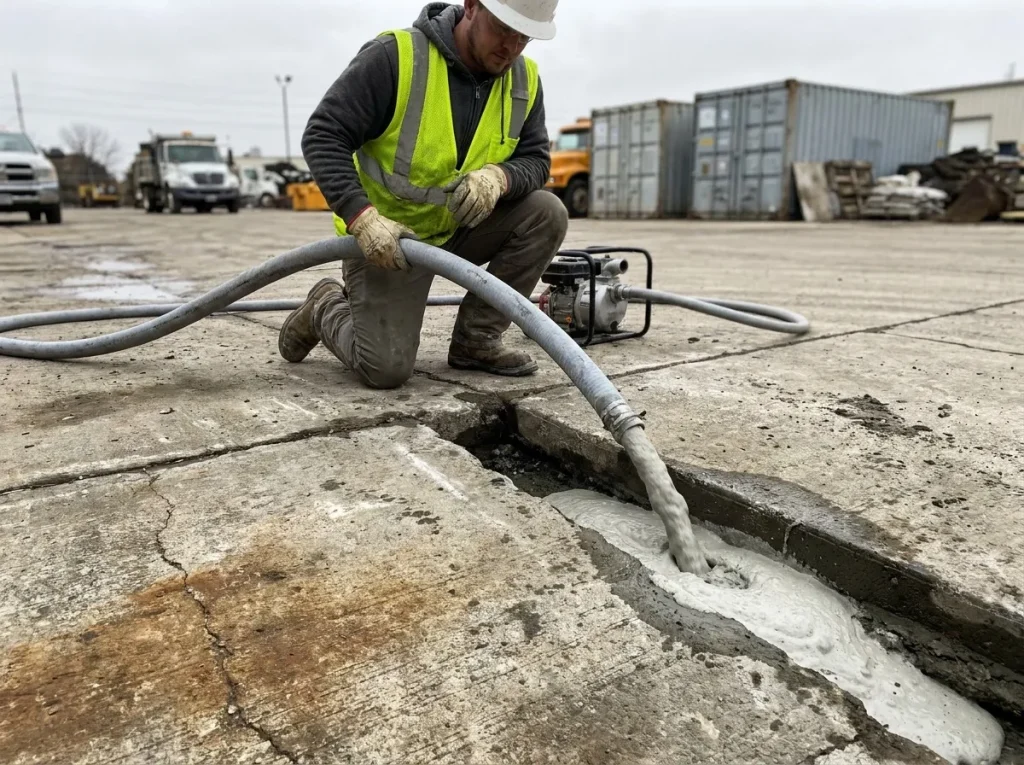
The pairings above become clearer when they are tied to the kinds of facilities where they are used. The examples below describe typical conditions rather than specific projects, and each one shows how the site investigation points toward more than one grouting method.
Distribution Warehouse with Settled Floor Panels
A warehouse floor that has dropped along a line of dock doors often sits over fill that was poorly compacted during construction, with voids forming where rainwater has entered along the building edge. Investigation may show shallow voids near the doors and loose fill several feet down.
The usual plan fills the larger voids with cellular grout, densifies the weak fill with compaction grouting where settlement is ongoing, and then lifts the panels with polyurethane so forklift traffic crosses joints without impact. Because the building usually stays in operation, the stages are often phased dock by dock so that shipping continues through the repair.
Pump Station or Below-Grade Vault
A wet well or utility vault with water entering through joints and a void forming behind the wall calls for a different order. Chemical grouting stops the infiltration first, because any fill placed while water is moving will wash out. Once the structure is dry enough to work, cellular or cementitious grout fills the void behind the wall, and polyurethane can underseal any adjoining slab or apron that settled into the cavity.
Roadway Approach or Culvert Crossing
Pavement over a culvert or at the end of a bridge often settles because fines have been carried away through a failed joint in the structure below. The repair may combine sealing the joint, filling the eroded zone with lightweight fill to avoid adding load to the structure, and then raising the pavement panels to restore ride quality. Lane closure windows usually decide how these stages are split across nights.
Industrial Equipment Foundation
A heavy equipment pad that has tilted can have both loose soil beneath it and voids at the slab interface. Compaction grouting improves bearing capacity where the soil has lost strength, while polyurethane corrects the final elevation to the tolerance the equipment requires. Alignment readings on the equipment itself often become part of the acceptance criteria.
Across all four examples, the method list comes from the investigation rather than from habit. A site that shows only shallow voids and stable soil may need nothing more than polyurethane, while a site with water, weak soil and large voids needs a coordinated plan that treats each of them in turn.
Verification Across More Than One Method
A multi-method project needs a verification plan that follows the ground from bottom to top. Each method has its own measures of success, and the records from earlier stages become the baseline for the next one. Without that link, it is difficult to tell which stage was responsible if a problem appears later.
Typical verification measures by method include:
- Compaction grouting: grout volume and pressure per stage, surface heave monitoring and before and after penetration testing where specified.
- Cellular grouting: wet density and cast specimen testing, placed volume against calculated void volume, and lift heights per placement.
- Chemical grouting: gel time checks, injection volumes per port and observation of water flow before and after sealing.
- Polyurethane grouting: lift monitoring, final elevation survey, field foam samples and hole patching.
Bringing these records into a single closeout package lets the owner see how each method contributed to the result. For areas like concrete void filling under operating facilities, that combined record is often what an insurer or auditor asks to see after a settlement claim.
Key Takeaways
- Combining grouting methods is justified when a site has several problems that no single material solves efficiently.
- Each method has a defined role: compaction for depth, cellular and cementitious fill for bulk voids, chemical grout for water, and polyurethane for lift and contact.
- The most common pairings put structural or water control work first and precise polyurethane lifting last.
- Sequencing and hold times prevent later stages from undoing earlier work.
- Verification should follow the ground from bottom to top, with each stage's records forming the baseline for the next.
- A site investigation turns method selection into an engineering decision instead of a preference for one material.
Planning a Project That Needs More Than One Technique
The planning stage decides whether a multi-method project runs smoothly or becomes a series of change orders. Owners and engineers can reduce that risk by asking the right questions early, before scope and budget are fixed around a single method that may not fit the site.
Useful questions to settle during planning include:
- What is causing the problem? Settlement, voids, weak soil and water can appear together, and each needs its own answer.
- Which condition must be treated first? Water control and deep stabilization usually come before surface correction.
- Can one contractor deliver every method? A single team that runs several grouting systems simplifies scheduling, responsibility and verification.
- How will success be measured? Acceptance criteria for each stage should be written into the specification before work begins.
- What operational limits apply? Traffic, production schedules and access windows shape how stages are phased.
When those questions are answered up front, combining grouting methods becomes a planned sequence rather than a reaction to surprises found mid-project. If your site shows more than one symptom and you are not sure which method should lead, you can talk through a multi-method grouting plan with our team before the scope is finalized.
Conclusion
Combining grouting methods makes sense whenever a site's problems span more than one material's strengths. Assigning compaction, cellular, chemical and polyurethane grouting to the conditions each handles best, and then applying them in a deliberate order, produces a repair that addresses causes rather than symptoms.
For owners and engineers, the value lies in planning the sequence and the verification together. When each stage has a clear role, a defined hold point and its own acceptance record, multiple grouting techniques work as one coordinated system, and the finished structure is supported from the soil below to the surface above.
Map out the right grouting sequence for your site Get a combined grouting method review for your project