


How Much Pressure Is Required for Pressure Grouting? | Houston, TX
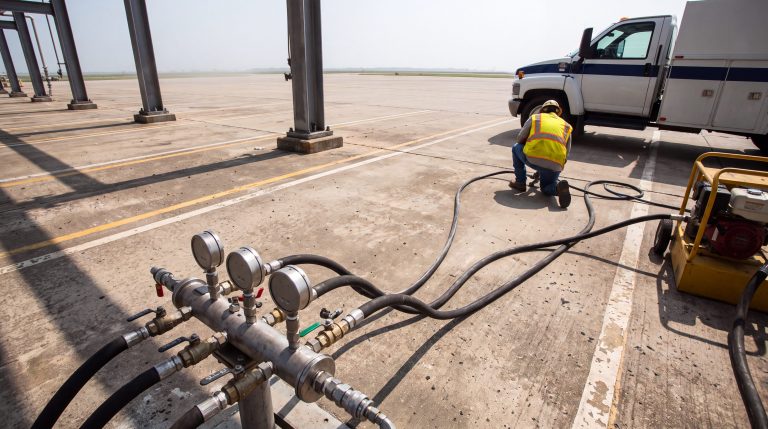
The pressure required for pressure grouting is set by the ground and the structure being treated, so it is a site limit rather than one number. Published guidance caps effective pressure near 0.5 psi per foot of soil and 1 psi per foot of rock, while compaction grouting typically runs at several hundred psi.
Project owners and facility teams in Houston often ask for a pressure number when they plan a grouting program. The honest answer is that pressure is a result of the design rather than an input, and it changes with the method, depth, groundwater and what sits above the zone being grouted. A figure that is safe under a deep warehouse slab can crack a shallow utility vault, so the number has to be earned from site conditions.
At Superior Grouting Services, we treat every pressure figure as a limit to confirm rather than a target to reach. This guide draws on the U.S. Army Corps of Engineers manual EM 1110-2-3506, Grouting Technology (2017), the most complete public reference on the subject. It was written for civil works such as dams and levees, so we use its figures to show how limits are reasoned, and your engineer of record (EOR) sets the values that govern your site.
In this guide, you'll learn what sets the pressure in a grouting job, which ranges apply to different methods, how a gauge reading is converted to the pressure at the injection point, what happens when pressure is too high, and how crews verify the result.
What Sets the Pressure in Pressure Grouting?
The governing limit is the pressure the ground and the structure can take without lifting, fracturing or cracking, and everything else in the job is built to stay under it.
The Corps manual describes effective pressure at the injection point as the static head of the grout plus any agitator head, minus the static head of groundwater and the dynamic losses in the lines. One foot of water head equals 0.433 psi, and the grout's static head is that figure multiplied by the elevation difference between the gauge and the injection point and by the grout's specific gravity. A heavier grout therefore adds more pressure at depth than the gauge at the pump shows.
The main idea is that pressure applied to a zone should stay below the weight of the material above it, because beyond that point the ground can lift or fracture instead of accepting grout, a relationship engineers describe through effective stress. The manual calls the unwanted result hydrofracture, a crack opened in soil or rock by grout pressure.
| Pressure component | What it is | Effect on the pressure at the injection point |
|---|---|---|
| Static head of grout (with any agitator head) | 0.433 psi per foot of height times grout specific gravity | Adds pressure; larger for heavier grout and deeper holes |
| Groundwater head | 0.433 psi per foot of water above the injection point | Subtracts from the effective pressure |
| Dynamic losses | Friction in hoses and the grout's own cohesion | Subtract; rise with pumping rate and thicker mixes |
| Gauge reading | What the pump operator sees | Only one part of the total, so it is corrected before it is compared with a limit |
What Pressure Ranges Do Different Grouting Methods Use?
The Corps manual gives about 0.5 psi per foot of soil depth and 1 psi per foot of rock depth as safe upper limits, while compaction grouting is run at sustained pressures of roughly 350 to 500 psi.
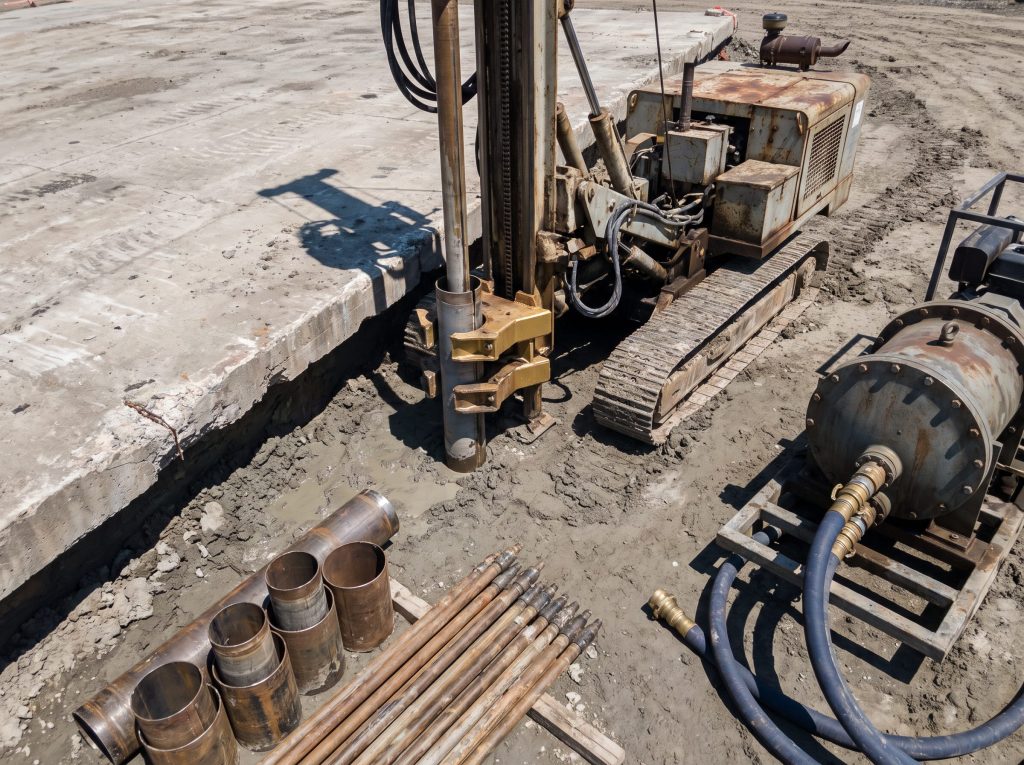
For soil and rock, the manual reports that recent Corps projects set maximum safe pressures at 0.5 psi per foot of overburden soil thickness and 1 psi per foot of depth into rock, rules of thumb drawn from experience with the weight of the material over the grouted zone. It adds that the rules were applied inconsistently, with past projects using 0.5 to 2.0 psi per foot, and that some read the guideline as the required pressure when it is a maximum.
For massive bedrock with minimal risk of damage, the manual allows trial values of 1.5 to 3.0 psi per foot, tested stage by stage, with about 1.0 psi per foot in the uppermost stage. Compaction grouting works differently because very stiff, low slump grout displaces and densifies soil. The manual describes piston pumps capable of continuous pressures up to about 1,000 psi, reports efficient compaction of most soils at sustained pressures of 350 to 500 psi, and notes that maximums near 1,000 psi for 3 minutes have been specified. These numbers sit far above the soil rule of thumb because the grout is a stiff growing mass rather than a fluid, and the controlling checks are ground surface heave and structure movement. You can read how this method works on our compaction grouting page.
| Method or situation | Pressure figure reported in EM 1110-2-3506 | Condition that governs the figure |
|---|---|---|
| Grouting through overburden soil | Maximum about 0.5 psi per foot of soil thickness | Rule of thumb from past Corps projects; a maximum, not a target |
| Grouting into intact rock | About 1 psi per foot of depth into rock | Safe guideline for most intact rock with no overburden or reliable isolation |
| Massive bedrock, low risk of damage | Trial values of 1.5 to 3.0 psi per foot | Tested stage by stage; about 1.0 psi per foot in the uppermost stage |
| Compaction grouting | Sustained 350 to 500 psi; up to 1,000 psi for 3 minutes specified | Stiff low slump grout; based on a test program or the first stages |
| Grouting around a buried conduit or liner | Not above 10 psi at the injection ports | Example specification for contact grouting of a conduit; the designer sets the final value |
Chemical and polyurethane injection follow the product data sheet, the flow conditions and the engineer, so we quote no general figure for them.
How Do You Work Out the Gauge Pressure at a Given Depth?
You start with the allowable effective pressure at the injection point, then add or subtract the static head of the grout, the groundwater head and the line losses to find what the gauge may read.
A short illustration helps. Take an injection point 20 feet deep in soil, a rule of thumb of 0.5 psi per foot and a grout with a specific gravity of 1.5. The allowable effective pressure is 0.5 times 20, or 10 psi, while the static head of the grout column is 0.433 times 20 times 1.5, about 13 psi, so the weight of the grout alone exceeds the limit before the pump adds anything. These numbers illustrate the arithmetic and are not a design value, because a real project uses measured densities, groundwater levels and the limits the EOR approves.
The result is that crews on deeper holes often use thinner mixes, grout in stages, or let gravity do the work in the upper zones, and a specialty grouting contractor based in Houston should build this correction into the pressure plan so the crew reads the corrected value instead of the gauge alone. The Corps manual notes that on some projects only the gauge pressure at the top of the hole was used, with no allowance for the grout column's head, and it separately lists several of its own projects with damage or hydrofracture incidents.
| Step | Illustrative value | Working |
|---|---|---|
| Depth to injection point | 20 ft | Given |
| Allowable effective pressure | 10 psi | 0.5 psi per foot times 20 ft |
| Static head of grout | About 13 psi | 0.433 times 20 ft times specific gravity 1.5 |
| Groundwater head | 0 psi | Assumes groundwater below the injection point |
| Result | Limit already exceeded by the grout column | Mix, staging or gravity placement must change |
Why Does Too Much Pressure Cause Damage?
When pressure exceeds what the ground or structure can resist, grout stops filling voids and starts lifting slabs, opening cracks or fracturing soil, and the damage is usually hard to reverse.
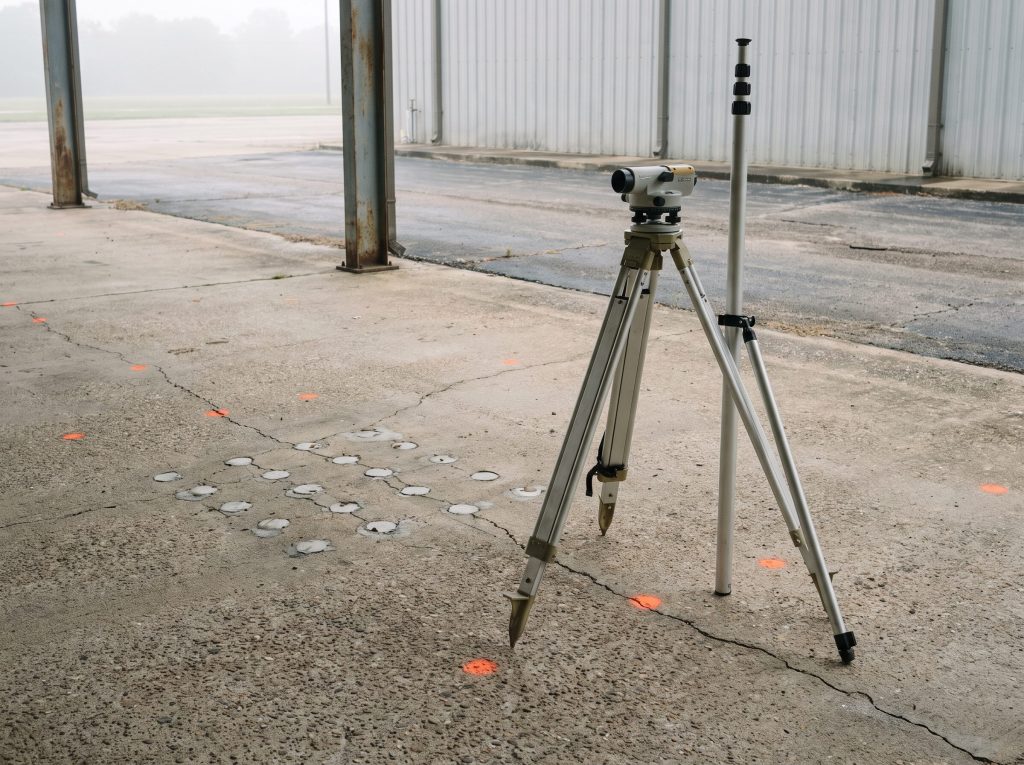
The Corps manual reports that borehole fracture pressure in soils can be approximated by the minor principal total stress plus the undrained strength of the soil, and it warns that confining stress is hard to estimate, especially under dams and levees, where embedded conduits and concrete walls leave stresses much lower than at the same depth in flat ground. The same caution applies on industrial sites, where a slab edge, a buried duct bank or a nearby foundation can behave like low confinement.
Rules of thumb leave out the depth to the water table, sloping ground and discontinuities that lower in-situ stress, and the manual states that using them blindly can be dangerous. It recommends full-scale test sections that find the actual limiting pressures for dilation, uplift and hydrofracture before production work begins, so a published figure starts the conversation and measurement on your site finishes it.
Heave and cracking show up first at the surface, so crews watch ground surface heave and structure movement during injection and stop when readings reach the agreed limits, because a pressure criterion alone does not show a structure starting to move.
How Do Crews Verify Pressure and Confirm the Result?
Crews log pressure, flow and volume at every injection point, compare them with the criteria the EOR approved, and monitor movement at the surface while the work is under way.
The manual notes that pressure is directly related to pumping rate, so a pressure criterion only holds when the rate stays constant, and it describes two common refusal criteria for compaction grouting: a pressure criterion and a specified injected volume per stage. For critical work, it describes measuring pressure directly in the stage with a down-the-hole sensor, which removes the need to estimate line losses.
A good verification record shows the gauge location, the grout density, the assumed groundwater level, the rate and the corrected effective pressure for each stage, plus movement readings. Records like these answer the question geotechnical consultants always ask, how do we know the injection worked, and give the QA/QC reviewer something concrete to sign off. If you want help turning a specification into a pressure plan, you can contact our team to review pressure limits for your site before drilling starts.
What Does Superior Grouting Provide for Pressure Grouting Projects?
Superior Grouting Services has worked on commercial, industrial and public-works grouting since 1983, and we treat safety as the highest priority.
Compaction grouting: We pump very low slump, mortar-like grout through a small casing to form a bulb that displaces and densifies soil.
Chemical and polyurethane grouting: We use low viscosity resins and gels for water control and polyurethane for void fill and concrete raising, where the product data sheet and flow conditions set the injection pressure.
Cellular, annular and abandonment grouting: We place cellular grout, fill annular space between carrier pipe and casing, and fill decommissioned pipelines, each with pressure limits tied to the structure being protected.
Honest limits: No published rule replaces site data, and we hand every pressure recommendation to your engineer of record.
Each of these services starts from the same pressure grouting procedure: confirm the limits, set the criteria with the engineer of record, then inject and monitor.
Key Takeaways
- Pressure comes from the site: The limit comes from the ground, the depth and the structure. Published guidance for soil and rock is expressed per foot of depth, not as one number.
- Rules of thumb are maximums: The Corps manual reports about 0.5 psi per foot in overburden soil and 1 psi per foot in rock. It warns that past projects misread these figures as required pressures.
- Compaction grouting runs much higher: Sustained pressures of roughly 350 to 500 psi are reported, because stiff grout densifies soil. Movement monitoring controls the work.
- The gauge is not the whole story: Effective pressure adds grout head and subtracts groundwater head and line losses. A deep, heavy grout column can exceed the limit by itself.
- Too much pressure causes damage: Hydrofracture, heave and cracking are the usual results, and test sections and monitoring catch them early.
- The engineer of record decides: Every figure here is guidance. Your EOR confirms the values that govern your site.
Frequently Asked Questions
What is the recommended pressure for pressure grouting in psi?
It depends on the method and depth. The Corps manual reports a soil maximum near 0.5 psi per foot and a rock guideline near 1 psi per foot, and your engineer of record sets the final value.
How is grouting pressure calculated?
Effective pressure equals the grout static head plus agitator head, minus groundwater head and dynamic losses. Water head is 0.433 psi per foot, multiplied by grout specific gravity for the grout column.
Is compaction grouting pressure higher than soil grouting pressure?
Yes, in general. Compaction grouting reports sustained pressures of about 350 to 500 psi, while the Corps guidance for grouting in overburden soil is a maximum near 0.5 psi per foot of depth.
Why can a pressure gauge reading be misleading?
The gauge shows pressure at the pump, not at the injection point. Grout head, groundwater and line losses change the effective pressure, so a gauge-only check can miss an exceeded limit.
What happens if grouting pressure is too high?
The ground can lift or fracture instead of accepting grout, which the Corps manual calls hydrofracture. Slabs can heave and nearby structures can crack, so crews monitor movement during injection.
Does a rule of thumb replace a site test?
No. The Corps manual warns that using rules of thumb blindly can be dangerous. It recommends test sections to find the actual limiting pressures for dilation, uplift and hydrofracture.
Why does pumping rate matter for pressure?
Pressure is directly related to pumping rate, because friction and grout cohesion rise with flow. A pressure criterion is only valid when the rate is held constant.
How do crews know when to stop injecting?
They use refusal criteria such as a maximum pressure or a set injected volume per stage, plus movement monitoring. The engineer of record approves the criteria before work begins.
Can the same pressure be used in soil and in rock?
No. The Corps manual reports lower limits for overburden soil than for rock, and it allows higher trial values only in massive bedrock with minimal risk of damage.
Who decides the pressure on a commercial or industrial project?
The engineer of record, using site data, structure tolerances and test results. A contractor supplies field experience and monitoring, but the governing values come from the EOR.
Conclusion
The pressure required for pressure grouting is the pressure the ground and the structure can safely accept, and the published guidance shows how widely that varies: about 0.5 psi per foot in soil, 1 psi per foot in rock, and several hundred psi for compaction grouting. The effective pressure at the injection point is what counts, and it depends on grout weight, groundwater and line losses as much as on the gauge.
Treat every figure here as a starting point for a conversation with your engineer of record, who confirms the final values for your site, structure and method.
Call (281) 937-8141 to review your pressure limits.
Request a pressure plan review for your site.
{"@context":"https://schema.org","@graph":[{"@type":"BlogPosting","@id":"https://www.superiorgrouting.com/blog/how-much-pressure-is-required-for-pressure-grouting-in-houston-tx/#article","isPartOf":{"@id":"https://www.superiorgrouting.com/blog/how-much-pressure-is-required-for-pressure-grouting-in-houston-tx/#webpage"},"headline":"How Much Pressure Is Required for Pressure Grouting? | Houston, TX","name":"How Much Pressure Is Required for Pressure Grouting? | Houston, TX","alternativeHeadline":["What Pressure Is Used for Pressure Grouting?","How Is Grouting Pressure Set and Checked?","Safe Grouting Pressure in Soil and Rock","Compaction Grouting Pressure Explained"],"description":"Grouting pressure is set by the ground and structure: about 0.5 psi per foot in soil and hundreds of psi for compaction. See the ranges in Houston, TX.","url":"https://www.superiorgrouting.com/blog/how-much-pressure-is-required-for-pressure-grouting-in-houston-tx/","datePublished":"2026-10-02","dateModified":"2026-10-02","author":{"@type":"Person","name":"David M. Coleman","honorificSuffix":"P.E."},"publisher":{"@id":"https://www.superiorgrouting.com/#organization"},"image":[{"@id":"https://www.superiorgrouting.com/blog/how-much-pressure-is-required-for-pressure-grouting-in-houston-tx/#image-1"},{"@id":"https://www.superiorgrouting.com/blog/how-much-pressure-is-required-for-pressure-grouting-in-houston-tx/#image-2"},{"@id":"https://www.superiorgrouting.com/blog/how-much-pressure-is-required-for-pressure-grouting-in-houston-tx/#image-3"}],"thumbnailUrl":"https://www.superiorgrouting.com/wp-content/uploads/2026/10/superiorgrouting-grouting-pressure-gauges-hero-scaled.jpg","mainEntityOfPage":{"@id":"https://www.superiorgrouting.com/blog/how-much-pressure-is-required-for-pressure-grouting-in-houston-tx/#webpage"},"articleSection":"Project Planning and Implementation","keywords":["pressure grouting","grouting pressure","compaction grouting","effective pressure","hydrofracture","Houston TX"],"wordCount":2527,"inLanguage":"en-US","articleBody":"The pressure required for pressure grouting is set by the ground and the structure being treated, so it is a site limit rather than one number. Published guidance caps effective pressure near 0.5 psi per foot of soil and 1 psi per foot of rock, while compaction grouting typically runs at several hundred psi.","speakable":{"@type":"SpeakableSpecification","cssSelector":[".direct-answer-block",".key-takeaways"]},"about":[{"@type":"Thing","name":"Grouting","sameAs":"https://en.wikipedia.org/wiki/Grout"},{"@type":"Thing","name":"Effective stress","sameAs":"https://en.wikipedia.org/wiki/Effective_stress"}],"mentions":[{"@type":"Organization","name":"U.S. Army Corps of Engineers","sameAs":"https://www.usace.army.mil/"},{"@type":"Thing","name":"Compaction grouting"}],"citation":[{"@type":"CreativeWork","name":"Effective stress (Wikipedia)","url":"https://en.wikipedia.org/wiki/Effective_stress"},{"@type":"CreativeWork","name":"EM 1110-2-3506, Grouting Technology (U.S. Army Corps of Engineers, 2017)"}]},{"@type":"WebPage","@id":"https://www.superiorgrouting.com/blog/how-much-pressure-is-required-for-pressure-grouting-in-houston-tx/#webpage","url":"https://www.superiorgrouting.com/blog/how-much-pressure-is-required-for-pressure-grouting-in-houston-tx/","name":"How Much Pressure Is Required for Pressure Grouting? | Houston, TX","description":"Grouting pressure is set by the ground and structure: about 0.5 psi per foot in soil and hundreds of psi for compaction. See the ranges in Houston, TX.","isPartOf":{"@id":"https://www.superiorgrouting.com/#website"},"inLanguage":"en-US","primaryImageOfPage":{"@id":"https://www.superiorgrouting.com/blog/how-much-pressure-is-required-for-pressure-grouting-in-houston-tx/#image-1"},"datePublished":"2026-10-02","dateModified":"2026-10-02","breadcrumb":{"@id":"https://www.superiorgrouting.com/blog/how-much-pressure-is-required-for-pressure-grouting-in-houston-tx/#breadcrumb"},"significantLink":["https://www.superiorgrouting.com/services/pressure/compaction/","https://www.superiorgrouting.com/about/","https://www.superiorgrouting.com/contact-us/","https://www.superiorgrouting.com/"]},{"@type":"FAQPage","@id":"https://www.superiorgrouting.com/blog/how-much-pressure-is-required-for-pressure-grouting-in-houston-tx/#faq","mainEntity":[{"@type":"Question","name":"What is the recommended pressure for pressure grouting in psi?","acceptedAnswer":{"@type":"Answer","text":"It depends on the method and depth. The Corps manual reports a soil maximum near 0.5 psi per foot and a rock guideline near 1 psi per foot, and your engineer of record sets the final value."}},{"@type":"Question","name":"How is grouting pressure calculated?","acceptedAnswer":{"@type":"Answer","text":"Effective pressure equals the grout static head plus agitator head, minus groundwater head and dynamic losses. Water head is 0.433 psi per foot, multiplied by grout specific gravity for the grout column."}},{"@type":"Question","name":"Is compaction grouting pressure higher than soil grouting pressure?","acceptedAnswer":{"@type":"Answer","text":"Yes, in general. Compaction grouting reports sustained pressures of about 350 to 500 psi, while the Corps guidance for grouting in overburden soil is a maximum near 0.5 psi per foot of depth."}},{"@type":"Question","name":"Why can a pressure gauge reading be misleading?","acceptedAnswer":{"@type":"Answer","text":"The gauge shows pressure at the pump, not at the injection point. Grout head, groundwater and line losses change the effective pressure, so a gauge-only check can miss an exceeded limit."}},{"@type":"Question","name":"What happens if grouting pressure is too high?","acceptedAnswer":{"@type":"Answer","text":"The ground can lift or fracture instead of accepting grout, which the Corps manual calls hydrofracture. Slabs can heave and nearby structures can crack, so crews monitor movement during injection."}},{"@type":"Question","name":"Does a rule of thumb replace a site test?","acceptedAnswer":{"@type":"Answer","text":"No. The Corps manual warns that using rules of thumb blindly can be dangerous. It recommends test sections to find the actual limiting pressures for dilation, uplift and hydrofracture."}},{"@type":"Question","name":"Why does pumping rate matter for pressure?","acceptedAnswer":{"@type":"Answer","text":"Pressure is directly related to pumping rate, because friction and grout cohesion rise with flow. A pressure criterion is only valid when the rate is held constant."}},{"@type":"Question","name":"How do crews know when to stop injecting?","acceptedAnswer":{"@type":"Answer","text":"They use refusal criteria such as a maximum pressure or a set injected volume per stage, plus movement monitoring. The engineer of record approves the criteria before work begins."}},{"@type":"Question","name":"Can the same pressure be used in soil and in rock?","acceptedAnswer":{"@type":"Answer","text":"No. The Corps manual reports lower limits for overburden soil than for rock, and it allows higher trial values only in massive bedrock with minimal risk of damage."}},{"@type":"Question","name":"Who decides the pressure on a commercial or industrial project?","acceptedAnswer":{"@type":"Answer","text":"The engineer of record, using site data, structure tolerances and test results. A contractor supplies field experience and monitoring, but the governing values come from the EOR."}}]},{"@type":"BreadcrumbList","@id":"https://www.superiorgrouting.com/blog/how-much-pressure-is-required-for-pressure-grouting-in-houston-tx/#breadcrumb","itemListElement":[{"@type":"ListItem","position":1,"name":"Home","item":"https://www.superiorgrouting.com/"},{"@type":"ListItem","position":2,"name":"Blog","item":"https://www.superiorgrouting.com/blog/"},{"@type":"ListItem","position":3,"name":"How Much Pressure Is Required for Pressure Grouting? | Houston, TX"}]},{"@type":"ImageObject","@id":"https://www.superiorgrouting.com/blog/how-much-pressure-is-required-for-pressure-grouting-in-houston-tx/#image-1","url":"https://www.superiorgrouting.com/wp-content/uploads/2026/10/superiorgrouting-grouting-pressure-gauges-hero-scaled.jpg","contentUrl":"https://www.superiorgrouting.com/wp-content/uploads/2026/10/superiorgrouting-grouting-pressure-gauges-hero-scaled.jpg","width":5504,"height":3072,"caption":"Pressure grouting pump and injection manifold with gauges on an industrial slab jobsite in Houston","creator":{"@id":"https://www.superiorgrouting.com/#organization"},"representativeOfPage":true},{"@type":"ImageObject","@id":"https://www.superiorgrouting.com/blog/how-much-pressure-is-required-for-pressure-grouting-in-houston-tx/#image-2","url":"https://www.superiorgrouting.com/wp-content/uploads/2026/10/superiorgrouting-grouting-pressure-compaction-rig-02.jpg","contentUrl":"https://www.superiorgrouting.com/wp-content/uploads/2026/10/superiorgrouting-grouting-pressure-compaction-rig-02.jpg","width":2400,"height":1792,"caption":"Compaction grouting drilling mast and casing sections beside a commercial concrete slab in Houston","creator":{"@id":"https://www.superiorgrouting.com/#organization"},"representativeOfPage":false},{"@type":"ImageObject","@id":"https://www.superiorgrouting.com/blog/how-much-pressure-is-required-for-pressure-grouting-in-houston-tx/#image-3","url":"https://www.superiorgrouting.com/wp-content/uploads/2026/10/superiorgrouting-grouting-pressure-heave-monitoring-03.jpg","contentUrl":"https://www.superiorgrouting.com/wp-content/uploads/2026/10/superiorgrouting-grouting-pressure-heave-monitoring-03.jpg","width":2400,"height":1792,"caption":"Survey level and leveling rod beside injection ports on a commercial concrete slab in Houston","creator":{"@id":"https://www.superiorgrouting.com/#organization"},"representativeOfPage":false},{"@type":"DefinedTermSet","@id":"https://www.superiorgrouting.com/blog/how-much-pressure-is-required-for-pressure-grouting-in-houston-tx/#terms","name":"Pressure Grouting Terms","hasDefinedTerm":[{"@type":"DefinedTerm","name":"Hydrofracture","termCode":"HYFR","description":"A crack opened in soil or rock when grout pressure exceeds what the ground can resist.","inDefinedTermSet":"https://www.superiorgrouting.com/blog/how-much-pressure-is-required-for-pressure-grouting-in-houston-tx/#terms"},{"@type":"DefinedTerm","name":"Effective pressure","termCode":"EFFP","description":"The pressure at the injection point: grout static head plus agitator head, minus groundwater head and dynamic losses.","inDefinedTermSet":"https://www.superiorgrouting.com/blog/how-much-pressure-is-required-for-pressure-grouting-in-houston-tx/#terms"}]}]}