Orange, TX
Specialty Grouting Services in Orange, TX
Superior Grouting Services delivers commercial and industrial pressure grouting across Orange and the Sabine River corridor. From chemical plant foundation stabilization at the manufacturing complexes along Highway 87 to pipeline grouting beneath the Sabine-Neches Waterway, our crews work the alluvial soils, persistent high water table, and decades of industrial loading that define this corner of the Golden Triangle. Reach out to schedule a free on-site evaluation.

Grouting Expertise on the Sabine River Corridor
Superior Grouting Services has provided pressure grouting in Orange, TX since 1983, supporting the chemical manufacturing, pipeline, marine fabrication, and waterway infrastructure that defines Orange County's industrial base. Orange sits at the eastern terminus of the Sabine-Neches Waterway, where it meets Sabine Lake, and the city's industrial DNA traces back to the Consolidated Steel and Levingston shipyards that built warships throughout World War II. Today, our crews work for chemical plant operators, midstream pipeline companies, marine fabricators, and refinery support contractors serving the Beaumont and Port Arthur facilities across the river.
Orange sits on Sabine River alluvial deposits, a thick column of high-plasticity clays interbedded with sand and silt lenses, with a water table that frequently rests within two to four feet of the surface. That geology, combined with steady chemical plant loading from operators along the Sabine River and recurring saturation events from Tropical Storm Imelda and Hurricane Harvey, drives chronic differential settlement, void development, and slab failure across industrial flatwork in the corridor. Superior Grouting provides compaction grouting, cellular grouting, polyurethane foam injection, pipeline and abandonment grouting, and concrete leveling, tuned to those conditions. With more than 1,424,346 linear feet grouted and 1,992,265 square feet of concrete raised, our team brings four decades of documented Gulf Coast performance to every Orange project.

Compaction Grouting in Orange, TX
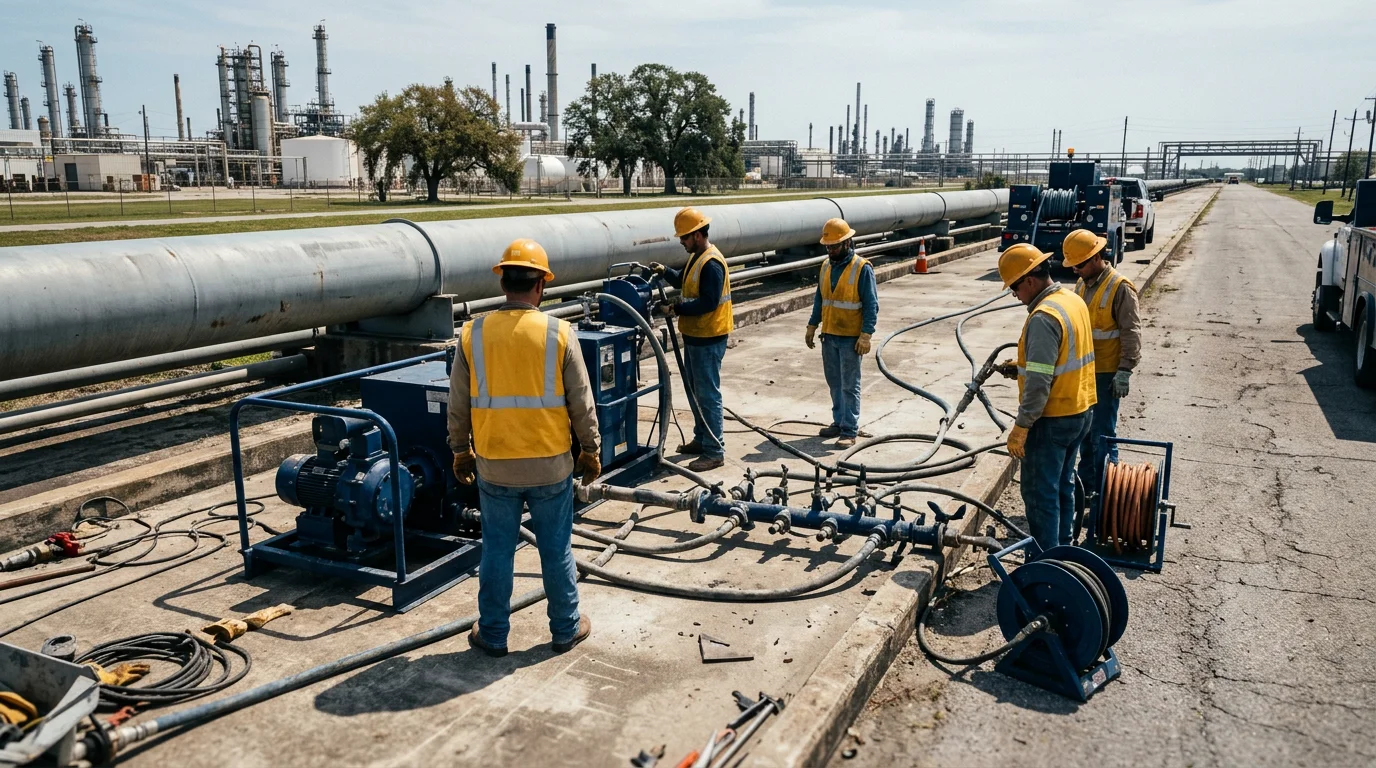
The Sabine River alluvial column under Orange is wet, soft, and variable. High-plasticity clay holds water year-round, sand and silt lenses move groundwater laterally through the formation, and the water table sits close enough to the surface that any excavation work rapidly becomes a dewatering project. Against that subgrade, chemical plant foundations, pipeline support pads, and waterway-adjacent infrastructure apply sustained loading that the native soil cannot carry without help. Compaction grouting answers the condition by injecting low-mobility mortar through small-diameter casings and forming densification bulbs that compress the saturated profile in place, no excavation, no dewatering, no shutdown.
Foundation work along the Sabine corridor has to start from an honest read of the alluvial column. The active layer beneath chemical plants, pipeline support structures, and warehouse pads is rarely uniform, and the soft pockets that drive settlement are usually below the upper crust, where surface inspection cannot find them. Our crews log the column at each port location, set casings into the active zone, and stage low-mobility grout where the soil profile actually controls. Bearing capacity increases incrementally as the bulbs mature, and the engineer of record obtains a documented uplift verified against a pre-treatment baseline rather than an arbitrary volume of pumped grout.
Equipment foundations, pipe rack footings, and tank ring pads at chemical manufacturing sites along the river telegraph movement long before any structural distress shows at grade. Controlled lifting with compaction grouting recovers that geometry while the facility continues to operate. Ports go in next to the affected element, grout volume is throttled in fractional increments, and a digital monitor at the slab records movement to the hundredth of an inch. Process units stay online, operators stay at their panels, and a signed lift log goes back to the engineer at the close of the shift.
Hurricane Harvey and Tropical Storm Imelda both flooded the corridor with water that the alluvial column could not drain quickly, and the ground beneath chemical plants and pipeline corridors has consolidated unevenly in the years since. Saturated clay loses strength under sustained load, fines wash along utility trenches, and voids open under pads that had been stable for decades. Post-flood compaction grouting restores bearing capacity in the affected zones and reduces pore space that would otherwise saturate again during the next storm cycle. That is how capital-intensive infrastructure stays in service through repeated events rather than needing a rebuild after each one.
Cellular Grouting in Orange, TX

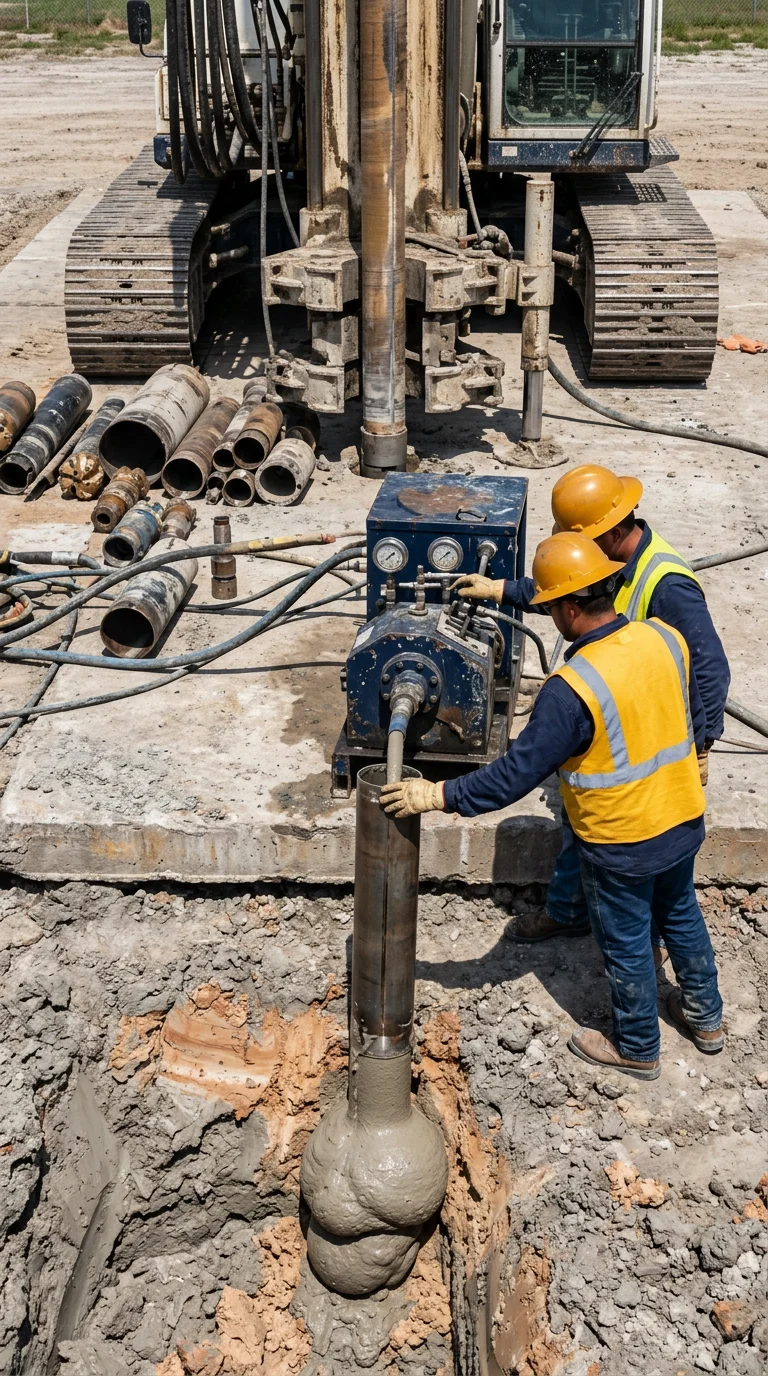
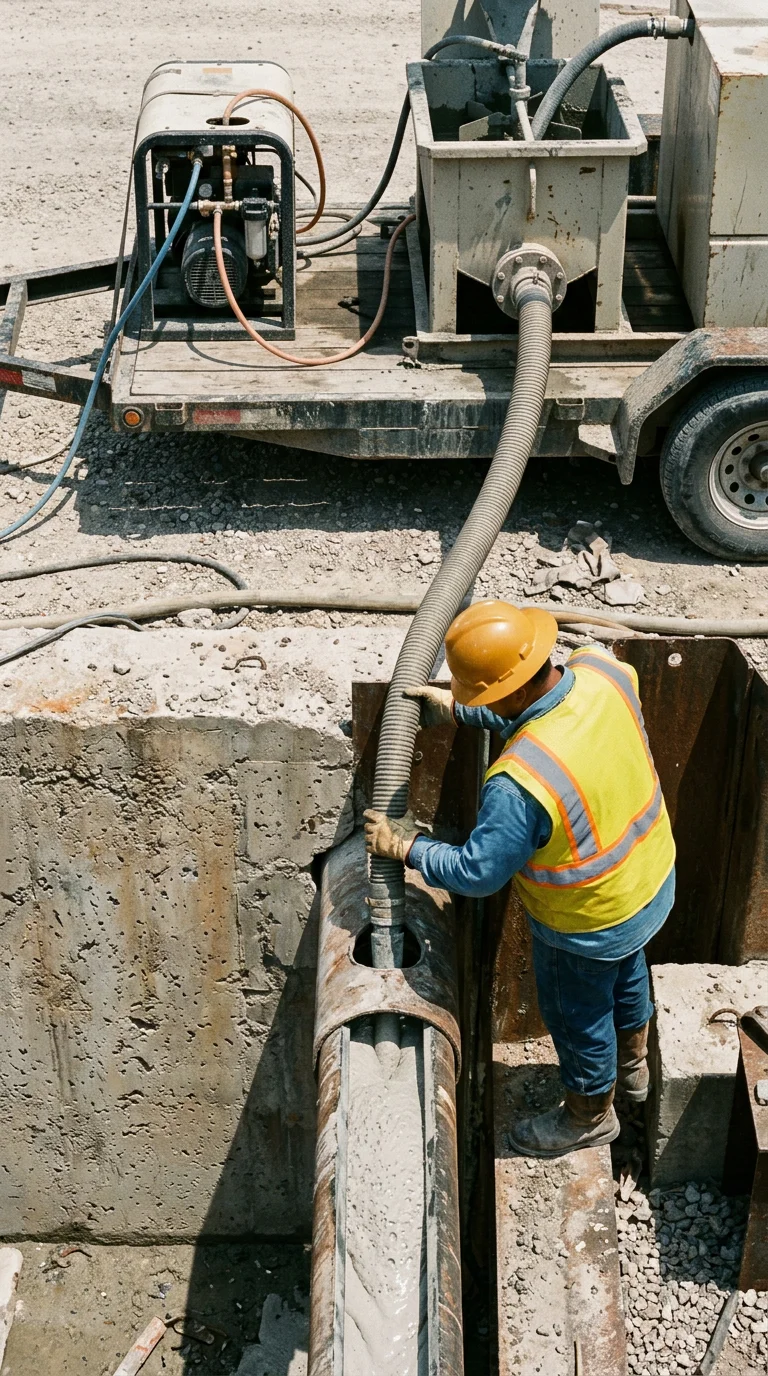
Void-fill demand in Orange is driven by chemical manufacturing facilities along the Sabine River, pipeline tie-ins beneath the Sabine-Neches Waterway, retired industrial infrastructure across the corridor, and the steady stream of slip-line rehabilitations on aging carriers running through the formation. Each placement has to ride lightly on saturated alluvium and hold position against a high water table that wants to float anything not heavy enough to stay put. Cellular grout meets both constraints. We batch CreteFoam-based cellular concrete on site, target densities anywhere from 20 to 70 PCF, and pump thousands of feet at low pressure into voids that conventional ready-mix could not reach.
A wet-cast cellular concrete fill in the 20 to 30 PCF range is the default for large-volume placements at chemical manufacturing sites along the river. The mix is self-consolidating, places without vibration in confined excavations beneath equipment skids, and carries the low unit weight that keeps saturated alluvium from being reloaded under the placement. Mobilization is one portable batch plant on the pad rather than a parade of ready-mix trucks staging across an active facility. For chemical plant operators working inside production windows, that mobilization profile is the difference between fitting the placement into an outage and missing it.
Annular fills behind newly slip-lined chemical and process carriers, load-reducing backfill against retaining walls along the waterway, and decommissioned process pits across the Orange industrial grid all share a specification challenge: density and 28-day strength must meet the engineer's target during placement in soils already at hydrostatic equilibrium. We tune the foam-to-cement ratio at the plant for each placement so cured material matches the spec, whether that is 20 PCF at 50 psi behind a slip-lined process line or 35 PCF at 120 psi against a port retaining wall.
The single condition that controls cellular work in Orange is the water table. A 20 PCF mix that performs perfectly in dry caliche country will float out of a saturated trench along the Sabine before it cures. Our crews target densities above the soil unit weight whenever the placement zone sits below the water table, which routinely means sanded mixes at 70 PCF or higher for load-reducing backfill and annular space work in deep fills. The other variable is the placement window: in saturated alluvium, mix selection accounts not only for cured strength but also for the set time before the hydrostatic head can move the material.
Polyurethane Grouting in Orange, TX
Slabs in Orange settle on a mechanism shaped by water. Hydrostatic pressure from the shallow water table, post-storm saturation along the Sabine, sustained chemical plant traffic over flatwork that sits on soft alluvium, and steady utility-corridor erosion all combine to pump fines out from beneath concrete. Polyurethane grouting resets that flatwork by injecting dual-component foam through quarter-sized ports. Cured material weighs roughly 4 PCF, closes cell-by-cell to block water migration, and accepts traffic the moment the crew rolls off.
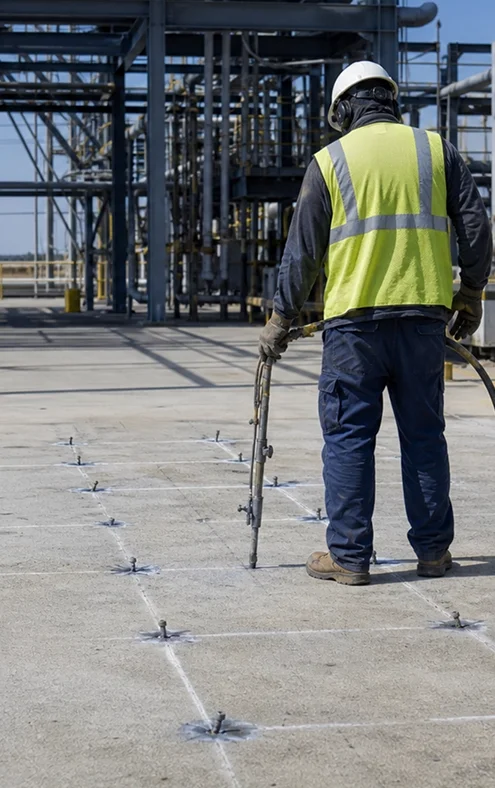
Loading aprons at chemical plants along Highway 87, equipment access drives at pipeline tie-in stations, and warehouse floors at industrial sites near the Sabine-Neches Waterway all share the same failure mode: heavy traffic over saturated subgrade has migrated fines, leaving an inch or more of void below the slab. Polyurethane foam concrete lifting in Orange closes those voids from the inside. Ports go in on a 3- to 5-foot grid, foam is staged against elevation, and the cured material's waterproof, closed-cell structure keeps the next storm cycle from washing the problem back in.
Commercial foundations along the Orange industrial corridor carry hydrostatic pressure from a shallow water table, cyclic moisture from chemical process water, and low-level shock from rotating plant equipment. All of that produces differential movement at the slab-and-footing joint. Polyurethane foundation repair restores contact between concrete and soil envelope by injecting beneath grade beams and footings in staged lifts. Foam expands, fills voids, compresses the clay envelope, and locks off the moisture path that was feeding the problem. The job typically closes inside a shift, with the facility staying in service while crews work.
Cement-based mudjacking has a long history along the Sabine, and most of it ends in a second repair within the decade. Saturated alluvium does not absorb the added overburden of a 100-plus PCF slurry well; the lift holds for a season, the slab resettles, and operators inherit the same problem on the next maintenance cycle. Polyurethane grout injection sidesteps that physics. At 4 PCF, the cured foam weighs less than the soil it sits on, and the closed-cell structure blocks moisture migration that would otherwise carry fines out from beneath the slab during the next saturation event. For chemical plant operators in Orange, that is why foam holds.
Pipeline Grouting, Utility Lines & Voids in Orange, TX
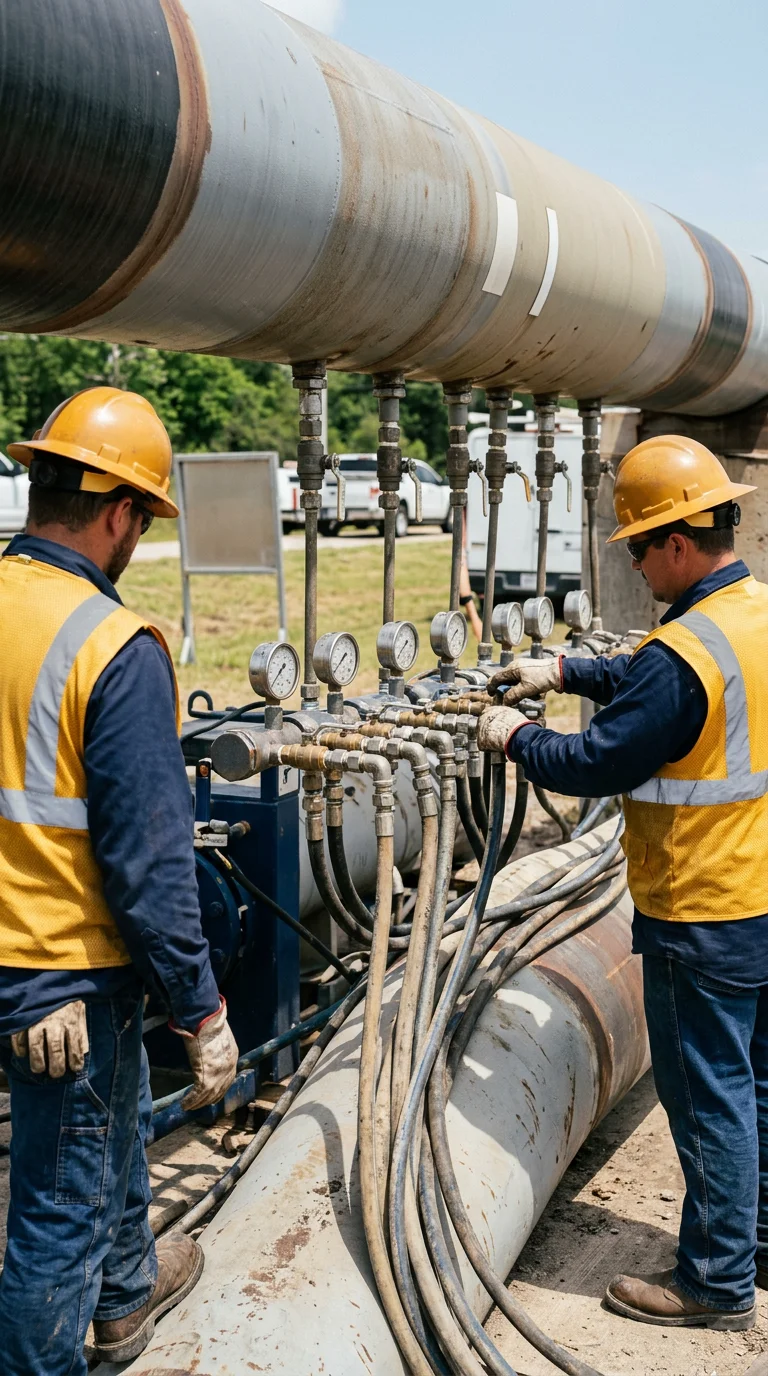
Pipelines in Orange County have overlapped for nearly a century. Process carriers serving the chemical plants along Highway 87, gathering and product lines crossing the Sabine and Neches into Louisiana, decommissioned wastewater laterals beneath legacy industrial sites, and new construction running fresh service into the Sabine-Neches Waterway facilities all share the same right-of-way grid. Each rerouting and retirement leaves steel in the ground that must be permanently closed. Superior Grouting pumps controlled-density cementitious and cellular fills into abandoned pipe, packs the annular space around fresh liners, and closes subsurface voids that open as alluvial groundwater flows through aging trenches.
Chemical plant and midstream operators in Orange County cannot leave a retired large-diameter pipe empty in the alluvial column. An open line is a groundwater pathway, a vapor risk in chemical service, and a settlement risk for everything above it. Our crews bulkhead the pipe at both ends, vent the high points, and place controlled-density cementitious or cellular fill until return pressure confirms a continuous column end-to-end. The work is documented for TCEQ Region 10 and facility records, and the line is closed out of service on the operator's books.
Slip-line and cured-in-place rehabilitation extend the service life of aging chemical plants and waterway-adjacent carriers. Still, every rehabilitated run creates an annular gap between the host and the liner. The fill behind that liner has to land on the engineer's density and strength targets without floating the carrier in saturated alluvium. We batch 20 to 35 PCF cellular grout on site, monitor the liner for lift during placement, and grade density up when the engineer's spec calls for structural backing. In the Sabine corridor work, where shallow groundwater controls placement, the selection of annular fill density is part of the lining design rather than an afterthought.
Subsurface voids around Orange industrial sites typically open along three pathways: erosion along aging utility corridors that carry fines into the alluvial column, hurricane-event saturation that flushes out pad bedding, and slow ground loss along legacy chemical process lines. Each failure mode requires a different material. Large-volume voids take low-density cellular; localized pockets at pile caps and pipe bedding take cement slurry; structural fills under reactivated equipment foundations use sanded mixes in the 70 PCF range. Getting the match right prevents ground loss from breaking the surface, such as pad subsidence or pavement dip near the corridor.
Concrete Leveling in Orange, TX
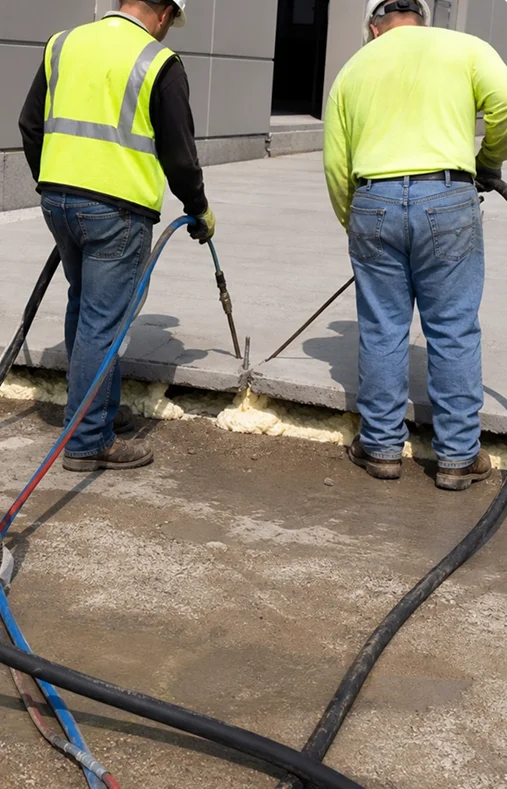
Two simultaneous factors drive slab settlement in Orange. The shallow water table consolidates alluvium under sustained load, and the storm cycle introduces intermittent saturation that flushes fines out of the pad bedding faster than the soil can recover. Loading aprons at chemical plants, warehouse floors near the Sabine-Neches Waterway, equipment access roads at pipeline tie-ins, and commercial parking pads across town all show the same progression: joints step, doorways stick, drainage stops working, and the slab geometry slowly leaves design grade. Polyurethane concrete leveling closes the voids beneath the slab, lifts the concrete back to grade, and turns the area over for traffic the same shift.
SUPERIOR Polylift is our branded slab-lifting workflow built around high-density polyurethane foam. A two-component resin is injected through 5/8-inch ports, expands beneath the slab, and compresses loose subgrade as it pushes the concrete back to design elevation. Cure is measured in minutes, and treated surfaces accept traffic immediately. For Orange chemical plant operators, where every hour a loading lane is closed incurs a cost, Polylift is the difference between rebuilding a slab during a scheduled outage and restoring it in place during a normal production shift.
There is a long track record of mudjacking in Orange, TX, and most of it has ended in a second or third repair, as concrete mudjacking in Orange, TX, simply cannot beat the physics of saturated alluvium. A cement slurry weighs in at around 100 PCF; the soil it sits on already approaches that density when fully saturated, and the lift adds overburden to a column that resettles within a season. Concrete jacking in Orange, TX, with polyurethane raising foam takes a different path. Cured material lands at roughly 4 PCF, sits lighter than the surrounding soil, and the closed-cell waterproof structure blocks the moisture migration that would otherwise undo the repair on the next storm cycle.
Tearing out a slab at an active Orange chemical plant means a full unit impact: demo, haul-off, rebar, forming, pour, and weeks of cure before loading can resume. Concrete leveling foam runs roughly 50 to 70 percent under the tear-out number, finishes inside a shift, and leaves the area available for traffic the same day. On industrial sites along the Sabine, the foam also doubles as a subgrade moisture barrier, a benefit that replacement concrete does not provide on its own. For loading docks, tank truck scales, plant access roads, and warehouse floors along the corridor, the cost-and-downtime scorecard tilts decisively toward leveling.
Our Commitment to Jobsite Safety
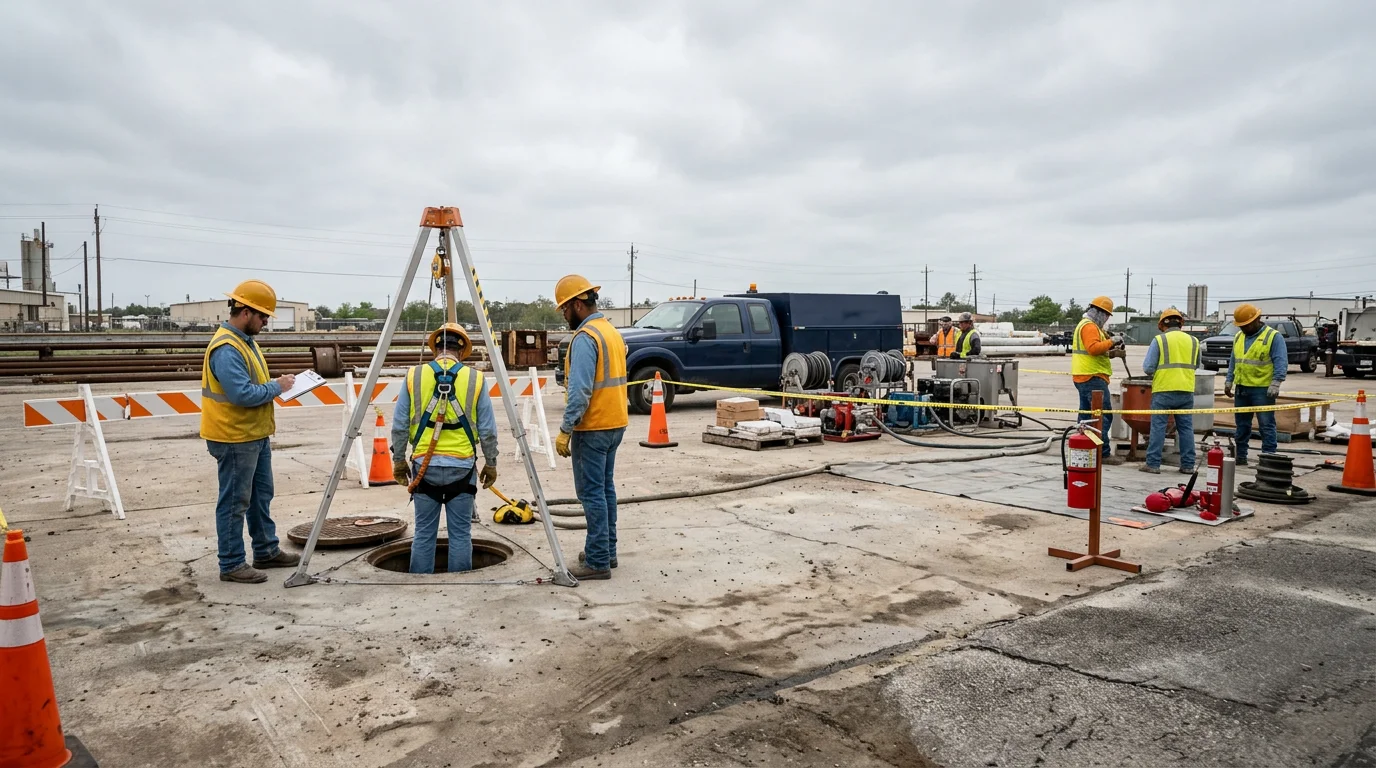
Superior Grouting maintains a zero-incident safety record across TRIR, DART, and fatality metrics. Our safety program is integrated into every phase of project planning and execution, from pre-mobilization hazard analysis through final demobilization.
Crews complete ongoing safety training through the Houston Area Safety Council and additional facility-specific orientations required by Orange-area chemical plant operators, midstream contractors, and Sabine-Neches Waterway facility managers.
A Gulf Coast Partner Since 1983
Superior Grouting Services is headquartered at 8927 Meadow Vista Blvd in Houston, TX, approximately 110 miles west of Orange via I-10. Founder Ron Rumpza opened the business in 1983, and the Sabine River corridor has been part of our service area through every phase of regional industrial growth, with same-day or next-day mobilization for Orange-area projects.
What we deliver to the Orange market:
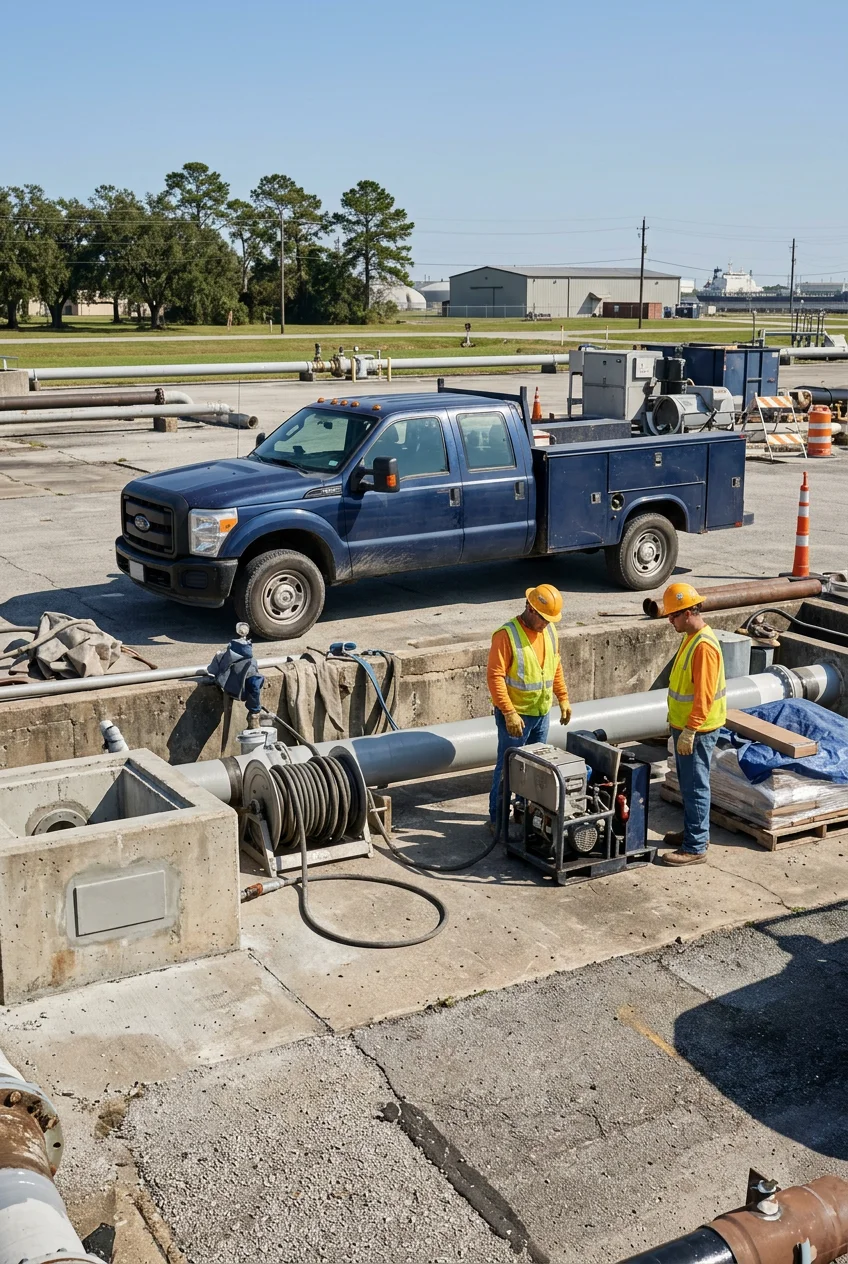
Chemical plant and industrial foundation grouting for manufacturing facilities along the Sabine River and Highway 87, including DuPont Sabine River Works and Firestone Polymers
Sabine-Neches Waterway infrastructure work supporting port, dock, and waterway-adjacent industrial sites tied into the USACE deepening program
Pipeline abandonment and annular grouting for retired and rehabilitated process and gathering carriers across the corridor
Post-storm rehabilitation restoring bearing capacity and re-leveling slabs after Harvey and Imelda saturation events
Refinery support service grouting for contractors that serve the Beaumont and Port Arthur petrochemical complexes from Orange-side fabrication and staging yards
Commercial slab repair and concrete leveling for warehouses, Orange County agency facilities, and properties where settlement has progressed past surface treatment, supporting Orange-area concrete slab contractors that subcontract specialty grouting on the slab repair phase
Our relationships with Orange-area chemical plant operators, midstream pipeline contractors, and Orange County agencies have been built one project at a time over four decades of service in the Sabine corridor.
“We have worked with Ron since 1997 helping him grow his business. Superior is a company that you know is going to be successful for the long haul. Their attention to customer service, quality of workmanship and their ability to find creative solutions to see that the job is done right the first time is what makes them a great company!"
“Thank you for a job well done, The attention to detail by Andy and Octavio is praise worthy. Companies build their name based on the quality of their people this is evident. The product performed as indicated, or better than expected, look forward to years of good performance and remaining leveled. To the entire staff, thank you for a job very well done”
“Superior Grouting used injectable foam to fix my cracked concrete. At the same time they lifted various parts of the concrete to even out the surfaces. They were FANTASTIC. On-time, hard-working, clean, precise – everything you want in a contractor. Their pricing was more than fair and their work speaks for itself. I highly recommend anyone using injectable foam for foundations, or lifting any kind of uneven surface to call Ron or Erica at Superior.”
Yes. Chemical manufacturing facilities along the Sabine River corridor are one of our core service segments in Orange. We provide compaction grouting for foundation stabilization, cellular grouting for void fill and load-reducing backfill behind retaining walls, polyurethane injection for slab lifting and underseal, and abandonment grouting for retired process lines. Our crews are ISNetworld-certified and trained to work within active chemical plant safety protocols throughout Orange County.
The Sabine corridor sits on alluvial deposits with high-plasticity clay interbedded with sand and silt lenses, and a water table that frequently rests within two to four feet of the surface. That column holds water year-round, loses strength under sustained loading, and routes groundwater laterally through the formation. The result is differential settlement beneath chemical plant foundations, void development along utility corridors, and pad subsidence in areas affected by Hurricane Harvey and Tropical Storm Imelda saturation.
Cellular grouting carries large-volume void fills, load-reducing backfill behind retaining walls, and annular space placements for waterway-adjacent infrastructure in Orange. The mix is engineered on-site for density and 28-day strength against saturated alluvium, where buoyancy controls placement. For port, dock, and pipeline tie-in work along the Sabine-Neches Waterway, sanded mixes at 70 PCF or higher prevent flotation in deep fills while neat mixes in the 20 to 30 PCF range serve light annular and load-reducing applications.
Yes, and high-water-table grouting is one of the most common applications in Orange. Compaction grouting densifies saturated alluvium in place without excavation or dewatering, while polyurethane injection lifts slabs that have already settled and seals the subgrade against future moisture migration. The closed-cell waterproof structure of the cured polyurethane, around 4 PCF, blocks the fines migration that drives repeat settlement on saturated soil profiles common to the corridor.
Annular space grouting fills the gap between a host pipe and a slip-lined or cured-in-place liner during pipeline rehabilitation. In Orange, this work supports chemical process carriers, gathering lines, and waterway crossings. Cellular grout is batched on site at 20 to 35 PCF, pumped at low pressure to avoid floating the liner, and graded up to higher densities when the engineer's spec calls for structural backing. The fill seals the annular gap and protects the rehabilitated carrier from groundwater intrusion.
Polyurethane foam injection uses a lightweight, expanding material that cures in minutes at roughly 4 PCF and adds minimal weight to underlying soils. Cement-based grouting uses heavier materials better suited for large-volume fills and deep stabilization. In Orange's saturated alluvium, polyurethane is preferred for slab lifting because its light weight avoids secondary settlement under the repair. At the same time, cellular and cement grouts handle pipeline abandonment, annular space fills, and large-volume void closures where compressive strength and volume are the priorities.
Commercial and industrial foundations built on Texas clay soils, alluvial deposits, or saturated subgrades are the most common candidates. In Orange, spread footings, mat foundations, pile caps, pipe rack footings, and slab-on-grade systems beneath chemical plants, warehouses, and waterway-adjacent industrial facilities all require grouting intervention when the alluvial column drives differential settlement. Grouting is also used for stabilizing machinery pads and bridge approach slabs along the Sabine corridor.
Most commercial polyurethane grouting projects in Orange are completed within a single work shift. Small slab sections lift in under two hours. Cure measures in minutes after injection, and treated surfaces accept foot and vehicle traffic immediately. For Orange chemical plant operators and pipeline contractors, the fast turnaround means a loading apron, equipment access drive, or warehouse bay returns to service inside a routine maintenance window rather than absorbing the multi-day cure that cement-based methods require.
Superior Grouting serves commercial, industrial, and municipal clients across the Gulf Coast and Southeast, from Texas and Louisiana to Florida, New Mexico, and Arkansas.
Schedule Your Free Estimate in Orange, TX
Contact Superior Grouting to discuss your commercial or industrial grouting project in the Orange area. Our team will evaluate your site, recommend the right solution, and provide a detailed proposal.