San Antonio, TX
Specialty Grouting Services in San Antonio, TX
Superior Grouting Services delivers commercial and industrial pressure grouting across the San Antonio metro and the broader Bexar County region. From karst void remediation across the Edwards Aquifer recharge zone to Balcones Fault Zone foundation stabilization beneath JBSA facilities, our crews address the dual-geology challenges, military-base infrastructure demands, and high-growth commercial corridors that define Alamo City construction. Contact our team to schedule a free on-site evaluation.

Pressure Grouting Experts Serving the Alamo City
Superior Grouting Services has provided pressure grouting in San Antonio, TX since 1983, supporting the military, healthcare, government, and commercial sectors that drive Bexar County's economy. As a trusted pressure grout company in San Antonio, TX, we deliver the densified concrete San Antonio facility owners depend on, karst void remediation, and specialty grouting solutions across Joint Base San Antonio, the South Texas Medical Center, the I-35 corridor, and the Loop 1604 commercial belt.
San Antonio sits on the Balcones Fault Zone, where Edwards Limestone plateau meets Blackland Prairie clay and the Edwards Aquifer recharge zone runs through the city. Two failure modes follow: karst-driven sinkholes and voids in the limestone, and shrink-swell movement on the eastern clay. Major employers (USAA, JBSA's three installations, H-E-B, Valero, NuStar, the Toyota Tundra plant) all manage facilities riding on it.
Superior Grouting provides compaction grouting, cellular grouting, polyurethane foam injection, pipeline and abandonment grouting, and concrete leveling for Alamo City foundations, settled slabs, and highway and municipal subgrades. With 1,424,346+ linear feet grouted and 1,992,265+ square feet of concrete raised, we bring four decades of documented performance to every project.

Compaction Grouting in San Antonio, TX
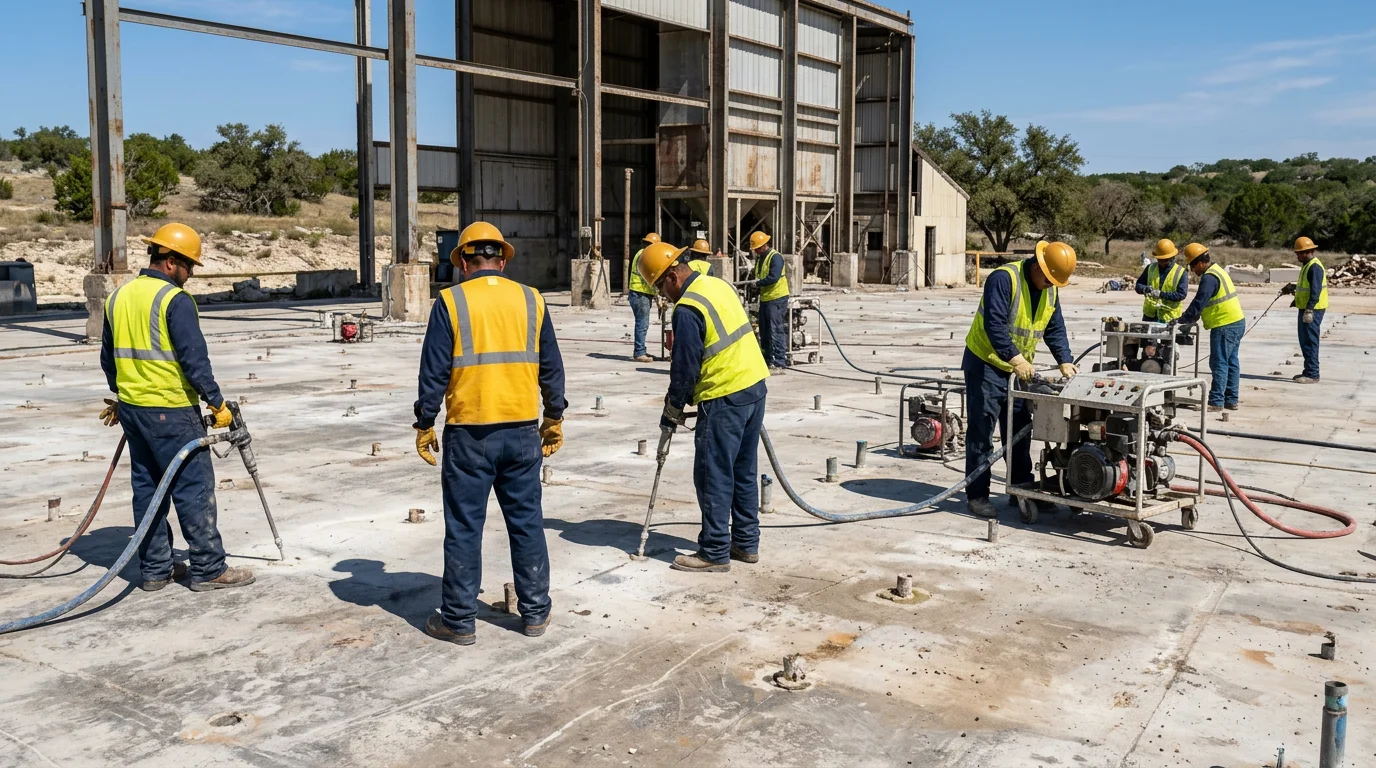
Bexar County straddles two soil profiles within the same project footprint, which makes compaction grouting the workhorse method in the Alamo City. Edwards Limestone on the north and west sides hides karst voids and dissolution pockets; Blackland Prairie clay on the east and south sides drives shrink-swell movement amplified by Flash Flood Alley drought-rain cycles. Compaction grouting addresses both with the same equipment and uses tracking to detect voids encountered during injection.
The Balcones Fault Zone produces abrupt soil transitions where the Edwards Limestone meets the Houston Black clay within feet of each other on the same property. Foundations spanning the transition see differential settlement that uniform repair plans cannot address. Our crews grid the site against the geological transition, set casing through the active clay layer into the limestone interface, and pump in staged increments. Bearing capacity is verified against engineer-specified targets along Loop 1604, the South Texas Medical Center, and Stone Oak commercial property.
The densified concrete San Antonio facility managers commission for settled slabs is more often a controlled-grouting operation than a hard lift. Distribution centers along IH-35, equipment pads at Toyota Manufacturing, and warehouse floors at Port San Antonio (former Kelly AFB) all schedule the work without taking operations offline.
Karst is its own specialization here. Edwards Limestone dissolution creates voids that follow no predictable geometry, so we pre-map suspected locations using geotechnical data and ground-penetrating radar where available, treat each void with the appropriate grout, and verify takeoff against theoretical void volume before declaring a zone stable along the Loop 1604 / De Zavala / Bandera corridor.
Cellular Grouting in San Antonio, TX

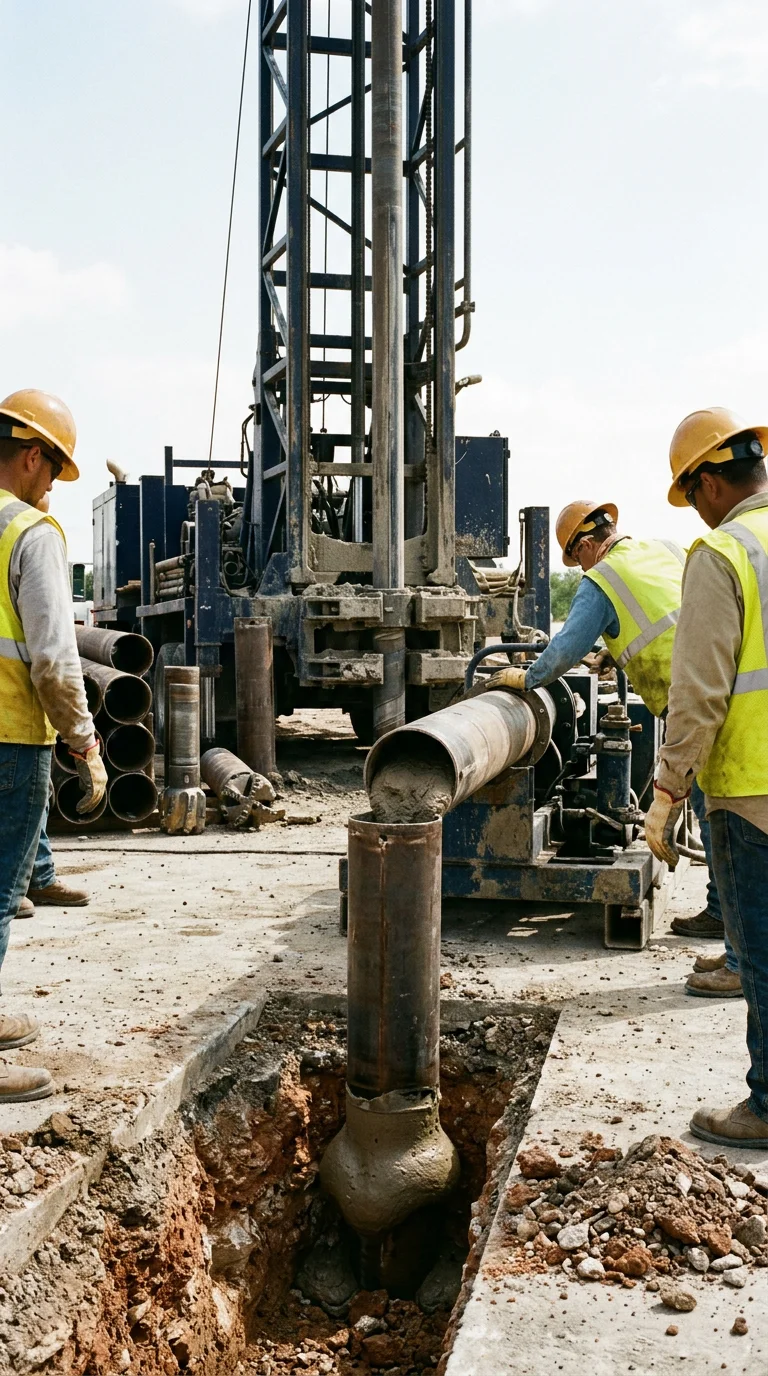
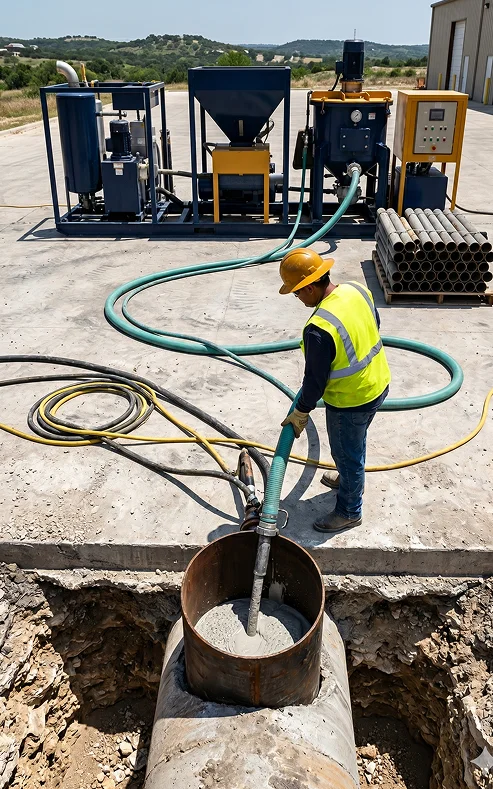
Void-fill demand in San Antonio sits at the intersection of three drivers: karst remediation across the Edwards recharge zone, decommissioning of legacy utility corridors beneath downtown and the medical center, and load-reducing backfill for the I-35 Capital Express and IH-410 reconstruction. Our CreteFoam-based mixes pump thousands of feet at low pressure and lock in lightweight CLSM behavior that conventional ready-mix cannot deliver inside an Edwards Aquifer Authority compliance zone.
Cellular concrete fill in San Antonio supports utility-tunnel abandonment beneath downtown and the Pearl Brewery district plus load-reducing backfill on bridge approaches across IH-410 and US-281. A 20 PCF wet-cast mix can be batched at a portable plant and pumped across an active corridor in a decommissioned vault foundation without staging dozens of ready-mix loads. The low unit weight matters where the underlying limestone hides karst features that conventional fill would aggravate.
Cellular foam concrete in San Antonio is specified for annular fills behind re-lined SAWS water and wastewater carriers, load-reducing backfill against retaining walls on IH-35 reconstruction, and decommissioned stormwater structures across Bexar County's older drainage grid. Within the recharge zone, mix selection is further constrained by the Edwards Aquifer Authority criteria, and our specs document the chain of approvals leading up to placement.
Hill Country soil profiles range from caliche-influenced caprock on the north side to deep clay in the southeast quadrant, and the cellular grout specification must match the substrate. Two mixed families cover most of the work in the Alamo City. Neat mixes in the 20 to 30 PCF range are used for load-reducing backfill and annular space applications where lightness is the point. Sanded mixes at 70 PCF and above carry the compressive strength needed for structural backfill under equipment pads, tank ring foundations, and transfer lines on commercial sites. We verify in-place density at the point of placement, not only at the batch plant.
Polyurethane Grouting in San Antonio, TX
Slabs settle in San Antonio for reasons that overlap rarely in any other Texas market. Expansive clay drives uplift and resettlement on the south and east sides, karst voids drive sudden collapse near the recharge zone, and Flash Flood Alley rainfall events pump fines out from under flatwork in a single afternoon. Polyurethane grouting injects dual-component foam through quarter-sized ports to lift flatwork back to grade, with the cured material closing the void path against the next saturation cycle.
Distribution centers along IH-35 and IH-10, retail plazas across Loop 410, and warehouse floors at Port San Antonio share one failure mode: heavy wheel paths that have rolled fines out from under the slab, leaving inch-plus voids beneath. Concrete lifting foam San Antonio property managers commission closes those voids by injecting foam staged against elevation along the active aisle, and the closed-cell cure resists the saturation cycle that opened the void in the first place.
Commercial foundations across Bexar County experience expansive-clay movement, karst-driven differential settlement, and hydrostatic pressure associated with Flash Flood Alley rainfall. Polyurethane foundation repair in San Antonio restores contact between concrete and subgrade by injecting beneath grade beams in staged lifts. Polyurethane grout injection compresses the clay envelope and locks off the moisture path that fed the problem, while the building stays in service.
Mudjacking has a track record on East Side Houston Black clay, and it is not a good one. Cement slurry at 100 PCF or more drives a secondary settlement cycle within a few years in saturated clay; polyurethane sidesteps that physics at 4 PCF and keeps medical campus, retail, and distribution operations within their working hours.
Pipeline Grouting, Utility Lines & Voids in San Antonio, TX
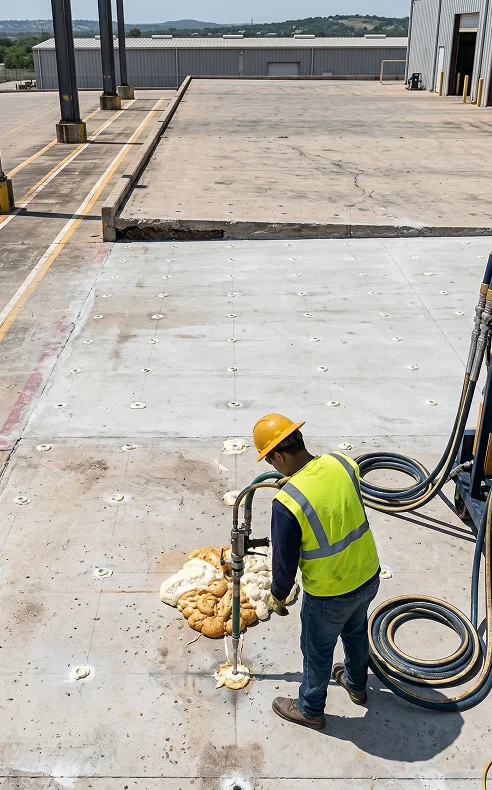
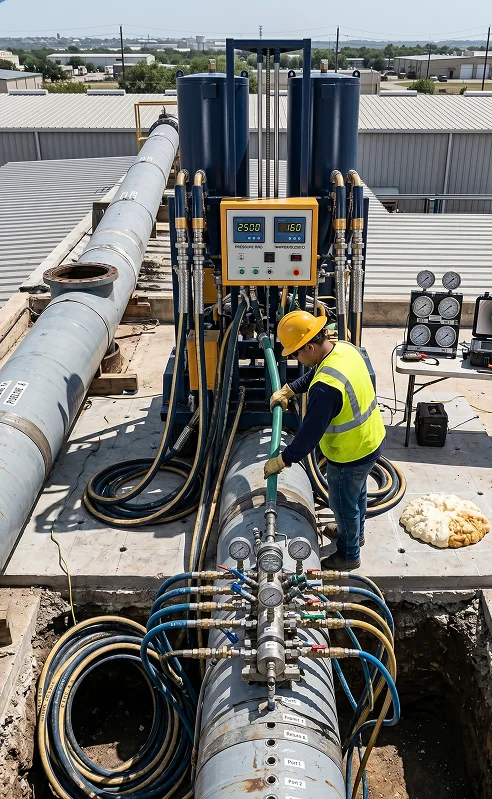
San Antonio's underground network combines SAWS water and wastewater corridors, CPS Energy gas distribution, TxDOT District 15 drainage structures, and aging Bexar County utility runs that have been layered for more than a century. Every reroute leaves a retired pipe in the ground that has to be permanently closed, and every Edwards Aquifer recharge crossing adds a regulatory specification on top of the structural one. Superior Grouting pumps controlled-density cementitious and cellular mixes into abandoned pipes, packs the annular space around newly rehabbed carriers, and closes the subsurface voids that develop when groundwater moves through karst features beneath the surface.
SAWS, CPS Energy, and TxDOT cannot leave a retired large-diameter line empty in the medical center or in the active right-of-way. Our crews seal both ends, vent the high points, and place fill until the return pressure on the discharge side confirms a continuous column tied to the engineer's pressure log. Documentation goes to the owner for TCEQ Region 13 records, and the line is closed out of service across the East Side redevelopment zone and beneath South Texas Medical Center.
Slip-line and CIPP rehabilitation extend the service life of aging SAWS and CPS Energy carriers, but the annular gap must be filled with material that meets Edwards Aquifer Authority criteria. Where the work crosses the recharge zone, the cellular mix is approved against EAA specs before placement, and liner lift is checked against engineer benchmarks at every panel. The aquifer adds layers of regulatory and material constraint that other Texas markets simply do not face.
Subsurface voids beneath San Antonio properties develop along three pathways: limestone dissolution along the Balcones Fault Zone, erosion through aging utility trenches, and saturation events that open pockets under previously stable pads. Each failure mode calls for a different mix family — large-volume karst takes low-density cellular, localized pockets take cement slurry, structural fill uses sanded mixes near 70 PCF.
Concrete Leveling in San Antonio, TX
Slabs in San Antonio absorb a suite of failure modes that rarely occur together anywhere else in Texas. Forklift and tanker traffic hammers loading docks on the south side; karst-driven subgrade collapse opens voids under retail plaza walkways near the recharge zone; expansive clay consolidates under sustained warehouse loading along IH-35; and Flash Flood Alley saturation pumps fines out from under flatwork in a single rain event. Polyurethane concrete leveling recovers the geometry without taking the facility offline.
SUPERIOR Polylift is our branded slab-lifting workflow built around high-density polyurethane foam. Two-component resin is injected beneath the slab, expands against the underside, and compresses loose soil as it lifts to elevation. For a distribution center along IH-35 or a medical office building within South Texas Medical Center, where every closed loading lane or patient corridor has a real cost, Polylift restores the slab in place during a standard operating shift rather than rebuilding it during a scheduled shutdown.
Concrete raising foam in San Antonio works where mudjacking has failed twice already: cement slurry adds weight to soil that is already saturated and compressible, so the lift settles back inside a few years. The concrete lifting San Antonio property managers commission across the IH-410 retail belt and the Stone Oak commercial corridor consistently chooses foam over cement for that reason.
Ripping out a 10,000-square-foot warehouse floor at a Bexar County distribution center carries six figures in demolition, disposal, rebar, concrete, cure time, and operational disruption. The concrete leveling company San Antonio facilities engineers retain runs roughly 50 to 70 percent below the tear-out number; the concrete slab leveling San Antonio property managers schedule keeps insurance, lease, and operational calendars intact.
Safety Performance That Exceeds Industry Standards
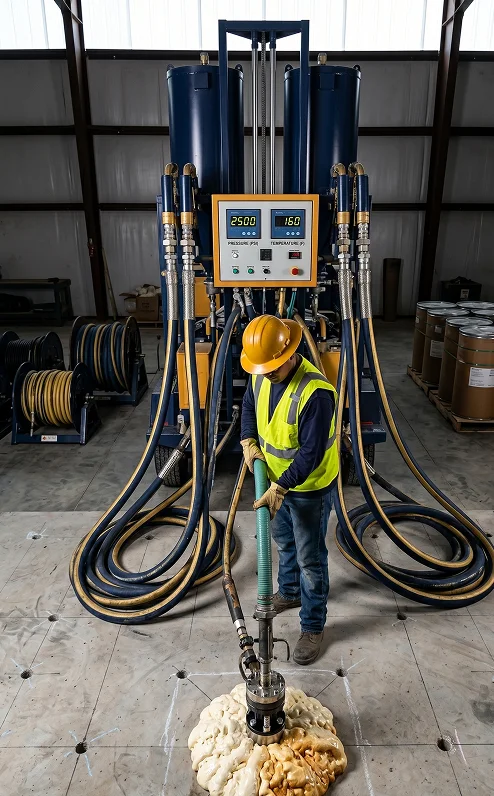
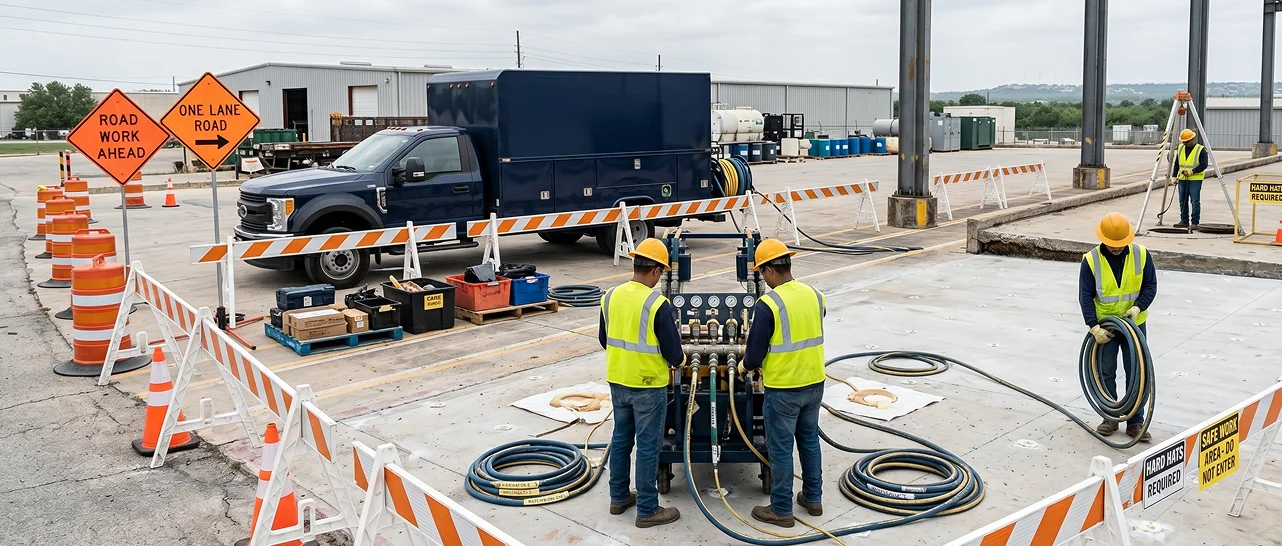
Superior Grouting maintains a zero-incident safety record across TRIR, DART, and fatality metrics. Our safety program is integrated into every phase of project planning and execution, from pre-mobilization hazard analysis through final demobilization.
Crews complete ongoing safety training through the Houston Area Safety Council and additional facility-specific courses required by JBSA contractor access (Fort Sam Houston, Lackland, Randolph), South Texas Medical Center hospital construction protocols, and SAWS contractor orientation for utility work over the Edwards Aquifer recharge zone.
Four Decades of Service to the Alamo City
Superior Grouting Services is headquartered at 8927 Meadow Vista Blvd in Houston, TX, approximately 200 miles east of San Antonio via I-10. Founder Ron Rumpza opened the business in 1983, and Bexar County has been part of our service corridor ever since.
What we deliver to the San Antonio market:
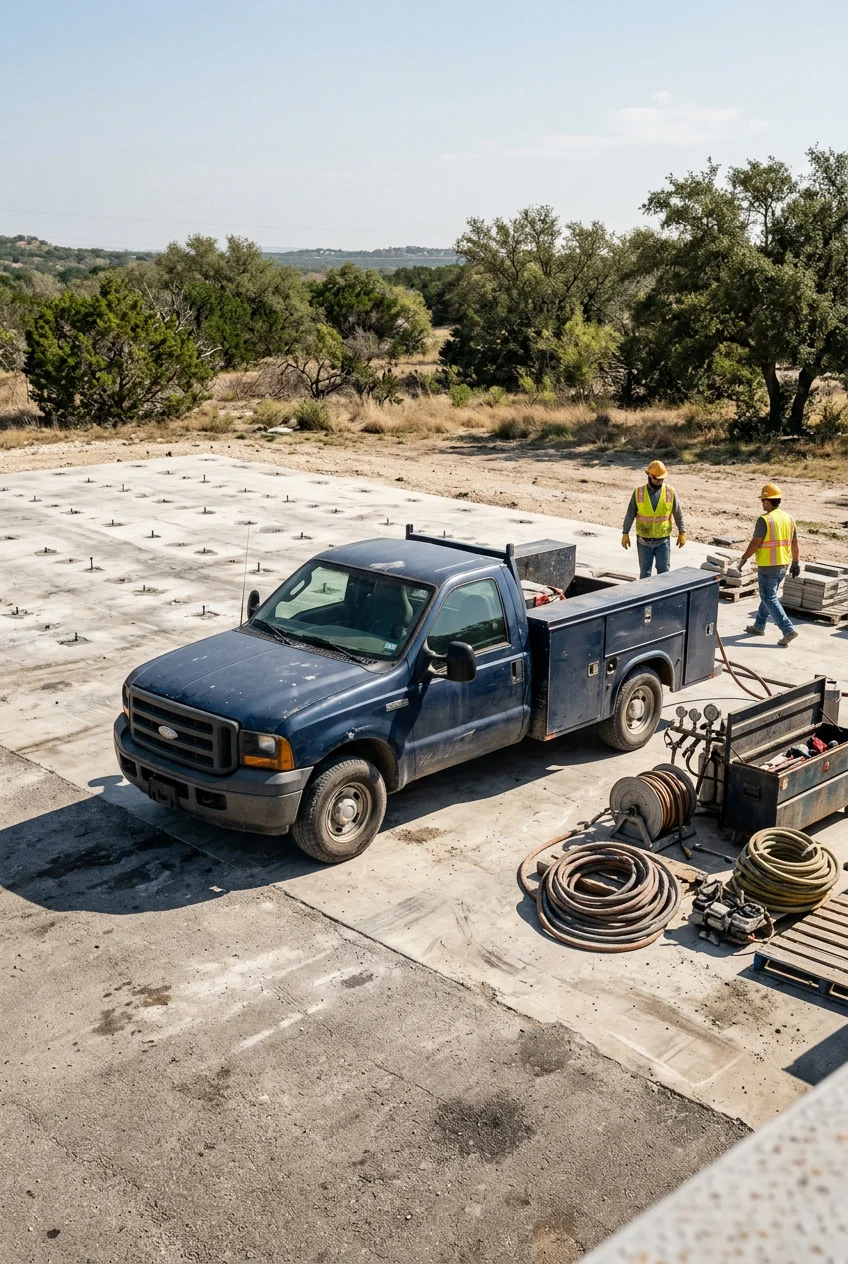
Military and federal facilities — grouting beneath JBSA installations at Fort Sam Houston, Lackland, and Randolph, where decades-old base infrastructure carries ongoing settlement remediation demand.
Medical center and institutional projects — South Texas Medical Center, Methodist Healthcare, University Health System, and UT Health San Antonio, where karst voids and equipment pad settlement create recurring work.
TxDOT District 15 subgrade and bridge approach — IH-10, IH-35, IH-410, Loop 1604, and the I-35 Capital Express corridor.
SAWS and CPS Energy utility abandonment — water, wastewater, and gas line decommissioning over the Edwards Aquifer recharge zone, working to Edwards Aquifer Authority specifications.
Commercial slab leveling — distribution centers along IH-35, retail plazas across Loop 410, and Toyota Motor Manufacturing TX.
Karst void remediation — sites along Loop 1604 between De Zavala and Bandera Road where Edwards Limestone dissolution has produced subsurface voids.
Our relationships with San Antonio general contractors, geotechnical engineering firms, federal contracting offices, and SAWS, CPS Energy, and Bexar County agencies have been built one project at a time over four decades.
“We have worked with Ron since 1997 helping him grow his business. Superior is a company that you know is going to be successful for the long haul. Their attention to customer service, quality of workmanship and their ability to find creative solutions to see that the job is done right the first time is what makes them a great company!"
“Thank you for a job well done, The attention to detail by Andy and Octavio is praise worthy. Companies build their name based on the quality of their people this is evident. The product performed as indicated, or better than expected, look forward to years of good performance and remaining leveled. To the entire staff, thank you for a job very well done”
“Superior Grouting used injectable foam to fix my cracked concrete. At the same time they lifted various parts of the concrete to even out the surfaces. They were FANTASTIC. On-time, hard-working, clean, precise – everything you want in a contractor. Their pricing was more than fair and their work speaks for itself. I highly recommend anyone using injectable foam for foundations, or lifting any kind of uneven surface to call Ron or Erica at Superior.”
The Balcones Fault Zone runs diagonally through Bexar County and creates abrupt soil transitions where Edwards Limestone meets Houston Black clay within feet of each other on the same property. Foundations spanning the transition see differential settlement that uniform repair plans cannot address. Pressure grouting in San Antonio, TX targets the fault transition specifically, sequencing injection along the geology rather than treating the structure as a single zone, with bearing capacity verified against engineer-specified post-treatment targets.
Yes. We hold the OSHA, ISNetworld, BROWZ, and CII credentials commonly required for Joint Base San Antonio contractor access at Fort Sam Houston, Lackland, and Randolph. Our crews complete site-specific orientation when projects require base entry. Densified concrete San Antonio installation engineers commission for equipment pads, compaction grouting beneath aging base buildings, and abandonment grouting on decommissioned base utility lines are typical scopes. Project access is coordinated through the prime contractor or contracting officer.
Sinkholes and subsurface voids in San Antonio are produced primarily by karst dissolution of the Edwards Limestone, particularly across the Edwards Aquifer recharge zone on the north and northwest sides. Groundwater moving through limestone enlarges fractures and bedding planes until the overlying soil collapses. Compaction grouting and cellular fill remediate the void; left untreated, surface failure propagates, triggering slab settlement that drives concrete leveling demand across Loop 1604.
Grouting over the Edwards Aquifer recharge zone must satisfy both the structural objective and the aquifer-protection requirements set by TCEQ Region 13 and the Edwards Aquifer Authority. Concrete leveling company San Antonio property owners select for this work uses grout selections that meet aquifer protection criteria, treats voids with controlled-takeoff injection, and documents placement against the geotechnical model. The work is coordinated with the regulatory approval chain before any material enters the recharge zone.
Concrete leveling San Antonio commercial property managers commission through Superior Grouting uses the SUPERIOR Polylift method to lift settled slabs back to grade in hours rather than weeks. Distribution centers along IH-35, retail plazas across Loop 410, equipment pads at the Toyota Motor Manufacturing TX plant, and bridge approach slabs along TxDOT District 15 corridors are routine applications. Concrete slab leveling for San Antonio facilities managers typically runs 50 to 70 percent below full replacement and returns the slab to service the same day.
A typical polyurethane lift on a commercial slab in San Antonio takes a single shift from setup through final elevation check. The cured foam reaches structural strength in minutes, and the slab is traffic-ready the same day. Larger projects across multiple bays may run two or three shifts. Concrete lifting foam in San Antonio rarely requires an extended facility shutdown, which keeps medical center, retail, and distribution operations on their normal calendar.
Commercial and industrial foundations on Texas clay and limestone are the most common candidates. In San Antonio, slab-on-grade systems beneath warehouses, retail plazas, and medical buildings, equipment pads at manufacturing plants, bridge approach slabs along TxDOT District 15 corridors, and military base facilities at JBSA all require grouting intervention when Balcones Fault Zone movement, karst dissolution, or expansive clay drives differential settlement. Bexar County is unusual because it contains both clay and karst geology in close proximity, so the foundation type and the soil type both determine the method.
Compaction grouting is the in-situ densification of weak or loose soil through the injection of low-slump, low-mobility mortar-like grout that forms a bulb and displaces and densifies the surrounding soil. The result is increased bearing capacity and reduced settlement risk for foundations, slabs, and structural elements above. In San Antonio, it is used heavily across Balcones Fault Zone transitions, beneath South Texas Medical Center equipment pads, and along IH-35 and Loop 1604 commercial corridors where karst features and clay shrink-swell stress overlap.
Superior Grouting serves commercial, industrial, and municipal clients across the Gulf Coast and Southeast, from Texas and Louisiana to Florida, New Mexico, and Arkansas.
Schedule Your Free Estimate in San Antonio, TX
Contact Superior Grouting to discuss your commercial or industrial grouting project in the San Antonio area. Our team will evaluate your site, recommend the right solution, and provide a detailed proposal.