Don't Replace, Re-Engineer It.
Polyurethane grouting (also called polyurethane foam injection, polyurethane concrete lifting, or polyjacking) is the injection of high-density expanding polyurethane foam through small 5/8-inch holes to lift, level, and stabilize sunken concrete slabs, pavements, and foundations. Superior Grouting in Houston, TX has performed polyurethane concrete lifting, slab jacking, foundation repair, soil stabilization, and crack injection for commercial, industrial, oil & gas, and public works clients across the Texas and Louisiana Gulf Coast since 1983. Polyurethane foam cures within 15 minutes, lasts 50+ years, and is waterproof and chemically inert.

Public works, roads, streets, highways, bridge approach & departure slabs
Airport authorities: runways, ramps, taxiways
Existing building foundations and concrete structures
Dams, levees and drainage structures
Underground utilities: joint, tunnel and manhole sealing
Trench Breakers for Pipelines (Oil & Gas)




At Superior Grouting, we are committed to providing the best polyurethane grouting in Houston for our clients, including government agencies, industrial facilities, and large corporations. With our experience and qualifications, we have become a trusted provider of polyurethane grouting Houston services, specializing in solving settlement and instability issues across concrete structures, bridges, interstates, and foundations.
Our process involves the injection of expanding polyurethane grouting, which is a cleaner, faster, and less disruptive method compared to cementitious grouting. This modern approach delivers superior precision and long-term reliability, making it the preferred technique used by Departments of Transportation, municipalities, and state agencies nationwide.
Not only is polyurethane injection fast and effective, but it is also economical and environmentally safe. Our team is dedicated to providing value while minimizing downtime, ensuring every project is completed with quality and care.
We specialize in high-performance pressure grouting services designed for government agencies and large corporations. Our skilled technicians use advanced techniques to solve settlement and stability issues, helping clients maintain the long-term value of their assets.
One of the unique solutions we offer involves dual-component polyurethane injection systems that mix and expand under pressure. This high-density foam quickly fills voids, stabilizes subgrades, and re-levels slabs with precision. It's a reliable and cost-effective solution for foundation repair, soil stabilization, and infrastructure rehabilitation.
Our method offers the same precision and consistency you'd expect from a PU foam injection grouting factory, while remaining fully customized for each job site.
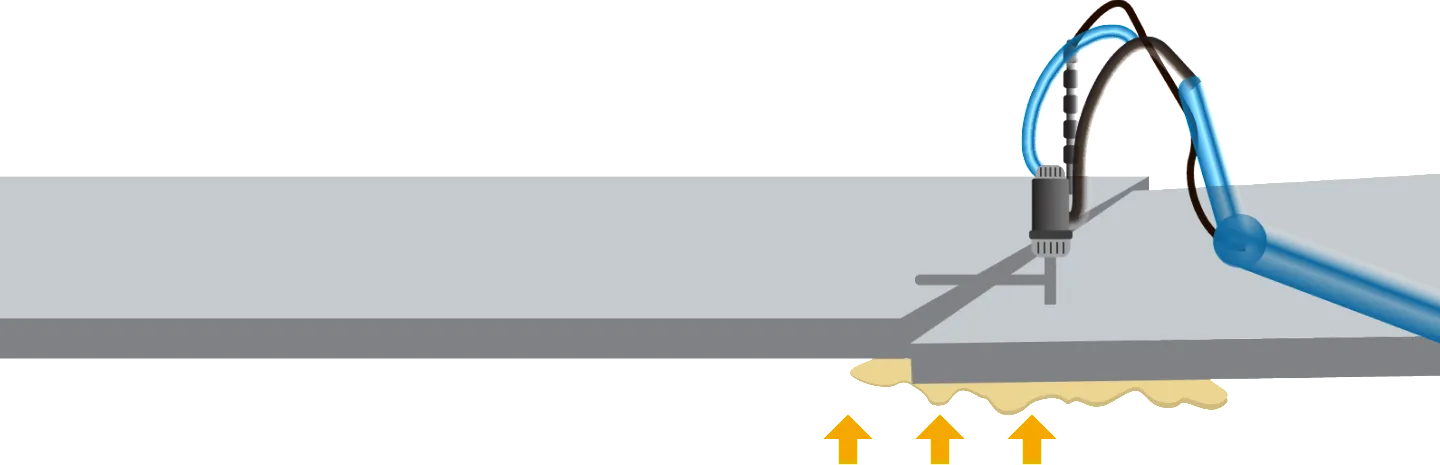
A technician drills small 5/8-inch holes (about the size of a dime) through the concrete at strategic injection points. A two-component polyurethane resin is injected through the holes at up to 1,100 psi. The two components react chemically, expand within 15-30 seconds to fill voids beneath the slab, harden, and lift the slab back to its original elevation. The slab is typically usable within 15-30 minutes of completion.
On-site Footprint — Small and compact
Mobility — Crews move easily between locations
Cleanliness — Minimal waste and cleanup
Responsiveness — Multiple teams allow quick scheduling and turnaround
Let us help you solve your polyurethane grouting needs efficiently and effectively. Contact us to learn how our experts can engineer a long-lasting solution for your next project.
Polyurethane foam injection, also known as PU foam grouting, provides outstanding performance compared to cement-based materials due to its lightweight nature, precision control, and strength. It is ideal for both foundation lifting and polyurethane foam foundation repair applications.
Polyurethane grouting is…
Cleaner -
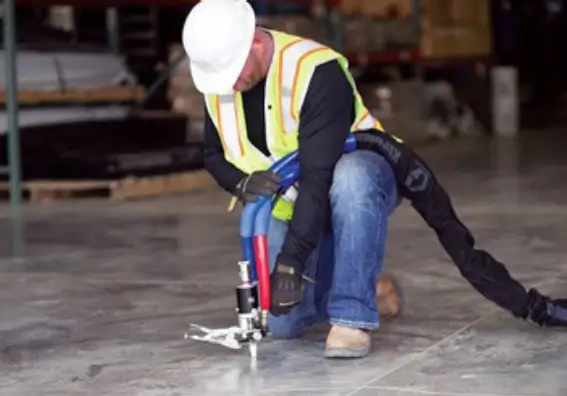
is the cleanest concrete lifting technique and stabilization process. Because the injection equipment is mechanically connected to the slab or structure, and mechanical seals engage when not injecting material, no material is exposed to the surface or surroundings in the repair area.
Less Disruptive -
is the quietest and fastest process for stabilizing and raising settled concrete slabs/structures. Because of the small hole size 5/8” (size of a dime), drilling is fast and quiet, and there is virtually no noise associated with the injection process itself. The equipment for poly
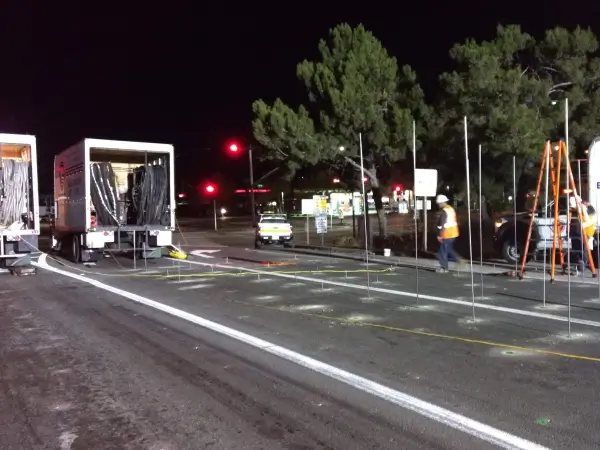
is self-contained in a box truck or enclosed trailer, which can be parked up to 210 feet away from the injection point.
Immediate Traffic - Foot traffic during work is functionally OK, and immediate resumption of vehicular traffic after work is completed can be expected. Polyurethane foam injection concrete lifting is not affected by foot traffic during the poly injection process. Vehicular traffic may resume immediately after work is completed. This includes heavy loading such as trucks and industrial equipment like forklifts, and even trains.
Fast - Polyurethane grout injection crews can lift concrete faster than standard slab jacking or mud jacking crews. Because of the small hole size and ability to move around quickly, poly grouting foam lifting is much more efficient than slab jacking. Because of the equipment design, upon arriving on a job, polyurethane grout crews are typically actively executing the work within 10 minutes of arrival for typical repairs.
Lightweight - Lightweight material reduces the overburden on underlying soils, reducing the chances for resettlement. Even the highest density polyurethane foam injection used for poly grout are significantly lighter than alternative lifting and stabilization materials. This reduces the amount of additional weight placed on the underlying soils. Geotechnical polyurethanes are an excellent choice for lightweight fills, because of their exceptionally low unit weights (2 to 4 PCF) and fast cure times (few minutes).
Waterproof - High density polyurethane is waterproof, so treated slabs are thoroughly undersealed. Polyurethane can also be installed in water, so flow testing or water stop applications with active flows are not a problem. Because of the near-immediate curing, water stopping jobs are fast and easily tested on site to ensure efficacy of the repairs. When the goal is sealing active groundwater infiltration in soils or joints rather than lifting a slab, we turn to permeation-based chemical grouting to seal the pathway at its source.
There are many times when polyurethane grouting is the only repair process that will address a problem. Here are some of the times when polyurethane grouting is best:
Large Slabs (>100 sf)
Large slabs (typically bigger than 100 square feet) are best repaired with
because polyurethane can travel under the entire slab from just one or two injection holes. This creates a more diffuse lifting force than cementitious grout. This speeds up work and lessens the chance of cracking.
Faster reacting lower density foams typically start to expand within a few seconds of injection, so they are good for concrete slab foam jacking. Slower reacting, higher density foams can travel as a liquid for up to 45 seconds before starting to expand and harden. This allows them to lift extremely large areas, as the liquid is injected at 1,100 psi, which forces it into what can be very small spaces under the foam concrete slab.
Heavy Slabs (Roadways · Bridge Approaches · Rail Crossings)
Because of its high expansion force and ability to spread under large areas of slabs and structures before expanding, high density polyurethane, often referred to as
, can lift extremely heavy slabs with ease. These include roadway slabs, bridge approaches, rail crossings and slabs with heavy loads, such as machinery bases and floors with backup battery power packs.
Cleanliness-Sensitive Areas
Due to the small, infrequent holes, low dust drilling is easy. Additionally, because there is a mechanical connection between the injection equipment and the slab, no material is exposed to the surface or surroundings. Automatic, mechanical valves on the injection equipment prevent leakage of material when not injecting. We use special dustless drilling equipment for most interior jobs.
Load Sensitive Areas (2-4 PCF Foam vs 125+ PCF Slurry)
The most common cause of slab settlement is inadequate compaction or bearing capacity of the underlying soils. Because high density polyurethane is lightweight (typically 2 to 4 pounds per cubic foot, with high-density industrial grades up to 9 PCF for the heaviest load applications), there is very little additional weight transferred to the underlying soil as part of repairs. This helps to minimize the chances of resettlement. Sand-based mud jacking material typically weighs more than 125 pounds per cubic foot. The weight savings with polyurethane grouting are significant.
Remote Job Sites
Because high density polyurethane is stored and transported as a liquid which then expands, a single truck and 18-foot enclosed trailer can easily transport more than 100 cubic yards of expanded material. The equivalent for slab jacking grout would require more than 6 large dump truck loads and onsite handling equipment. Raw polyurethane material is transported in standard 55-gallon drums. So, it is easily transported, stored and handled on job sites.
Applications Where Polyurethane Foam Injection Is Used
|
Factor |
Polyurethane Foam Injection |
Mudjacking (Cement Slurry) |
|
Injection hole size |
5/8 inch (dime size) |
1.5-2 inches |
|
Density of injected material |
2-4 PCF standard (up to 9 PCF heavy) |
100-130 PCF |
|
Cure / set time |
15 minutes |
24-72 hours |
|
Waterproof |
Yes (closed cell) |
No |
|
Lifespan |
50+ years |
5-25 years (subject to washout) |
|
Best for |
Time-sensitive · load-sensitive · interior · commercial · pavement |
Large void fills · low-traffic areas · budget-priority |
|
Disruption |
Minimal |
Moderate-high |
|
Soil compatibility |
Compatible with all soil types |
Limited in saturated soils |
|
Vehicular traffic resume |
Immediately after completion |
24-72 hours |
|
Foot traffic during work |
OK |
Disrupted |
Polyurethane concrete lifting cost in Houston typically falls into these ranges:
|
Project Type |
Typical Cost Range |
Notes |
|
Residential driveway (small slab) |
$500 - $2,500 |
Most jobs 1 day |
|
Sidewalk / patio |
$400 - $1,800 |
Per project |
|
Commercial parking lot section |
$3,000 - $15,000 |
Per affected area |
|
Warehouse / distribution slab |
$5,000 - $50,000+ |
Per affected area |
|
Roadway / highway section |
$25,000 - $250,000+ |
Project-specific |
|
Bridge approach slab |
$10,000 - $40,000 |
Per slab |
Cost factors include: slab thickness, depth of lift required, void volume to fill, access (interior vs exterior), traffic disruption requirements, and total project size. Polyurethane is more expensive per cubic foot than cement-based grout, but the cost-per-completed-lift is often lower because of the speed advantage (slab usable within 15-30 minutes vs 24-72 hours for mudjacking).
For a project-specific estimate, contact Superior Grouting at (281) 894-4175.

40+ years of polyurethane work since 1983
High-density foam (40-60 psi standard, up to 200+ psi for load-sensitive applications)
1,100 psi injection pressure for precise long-distance polyurethane travel under large slabs
5/8" injection holes (dime size) — preserves concrete aesthetics vs 1.5-2" mudjacking holes
10-minute crew start-to-work time — minimal disruption
Cure-to-traffic in 15-30 minutes — minimal downtime for live commercial sites
Polyurethane work performed for: Port of Houston Authority, Houston Airports, DFW Airport, City of Houston, U.S. Army Corps of Engineers, Houston Metro, Texas DOT, Louisiana DOTD
CSI Code 31 43 13.16 (Polyurethane Pressure Grouting)
ASTM D8024 Standard Practice for Selecting Polyurethane Foam compliance
Texas + Louisiana Gulf Coast service area: 11 cities
Call (281) 894-4175 for a project-specific estimate.
Superior Grouting provides polyurethane foam injection, concrete lifting, slab jacking, foundation repair, crack injection, and soil stabilization across:
Call (281) 894-4175 to discuss a project in your area.
Since 1983, Superior Grouting has been recognized as one of the top polyurethane grouting in Houston providers, proudly serving the Gulf Coast and beyond. Our consistent record of quality and safety has made us the trusted partner for public works agencies, contractors, and engineering firms.
Superior Grouting continues to be a leader in polyurethane grouting Houston services, known for precision, reliability, and customer satisfaction across every project.









































Polyurethane foam injection is a concrete lifting and stabilization technique in which high-density expanding polyurethane foam is injected through small holes (typically 5/8 inch) beneath a sunken concrete slab, pavement, or foundation. The foam expands within seconds to fill voids, densify the underlying soil, and raise the concrete back to grade. It is sometimes called polyjacking, foam jacking, or polyurethane concrete lifting.
A technician drills small 5/8-inch holes through the concrete at strategic injection points. A two-component polyurethane resin is then injected through the holes at up to 1,100 psi. The two components react chemically, expand within 15-30 seconds to fill voids beneath the slab, harden, and lift the slab back to its original elevation. The slab is typically usable within 15-30 minutes.
Polyurethane concrete lifting in Houston typically ranges from $7 to $25 per square foot, depending on slab thickness, depth of lift required, void volume, access, and project size. Driveways and small slabs are usually $500 to $2,500 total; commercial pavement and industrial slab projects can range from $5,000 to $50,000+. Contact Superior Grouting at (281) 894-4175 for a project-specific estimate.
High-density polyurethane foam used for concrete lifting is engineered to last 50+ years. The foam is closed-cell, waterproof, and chemically inert — it does not degrade in soil, does not absorb water, and is not affected by freeze-thaw cycles. The underlying lift is permanent unless new soil settlement occurs beneath the foam itself.
Polyurethane lifting and mudjacking serve the same purpose but differ in materials, lifting capacity, and disruption. Polyurethane uses 5/8-inch injection holes (vs 1.5-2 inch holes for mudjacking), cures within 15-30 minutes (vs 24-72 hours for mudjacking slurry), weighs ~2-4 pounds per cubic foot (vs ~120 pcf for mudjack slurry), and is waterproof. Mudjacking can be cheaper for very large void fills where weight is acceptable; polyurethane is preferred for time-sensitive projects, load-sensitive areas, and most commercial work.
High-density polyurethane foam begins expanding within 15-30 seconds of injection, reaches roughly 90% of final volume within 60-90 seconds, and reaches full compressive strength (typically 40-60 psi for slab-lifting grades, up to 200+ psi for high-density grades) within 15 minutes. Slabs are typically walkable in 15 minutes and ready for vehicle traffic in 15-30 minutes.
The terms are largely used interchangeably in the construction industry. 'Polyurethane grouting' typically refers to the broader category of polyurethane-resin injection for soil stabilization, void fill, water-leak sealing, and concrete repair. 'Polyurethane injection' is sometimes used more narrowly for crack injection in concrete and foundations. Both use the same family of two-component polyurethane resins.
Yes. Polyurethane crack injection is one of the standard methods for sealing foundation cracks, particularly cracks that leak water. A flexible polyurethane resin is injected into the crack under pressure; the resin reacts with moisture, expands, and forms a permanent waterproof seal that remains flexible enough to accommodate minor structural movement. For load-bearing structural cracks, epoxy injection is typically used instead.
Yes. High-density polyurethane foam is closed-cell and waterproof. It does not absorb water, does not degrade in groundwater or rainwater contact, and is routinely used for waterproofing applications including basement wall crack sealing, manhole and lift-station leak sealing, retaining wall waterproofing, and tunnel ingress sealing.
Common applications include large commercial slab lifting (warehouses, distribution centers, manufacturing plants); pavement lifting (parking lots, truck aprons, loading docks); roadway and highway slab leveling; airport runway and taxiway lifting; bridge approach slab repair; municipal infrastructure repairs; pipeline trench backfill; soil stabilization for foundations; and waterproofing of below-grade structures. Superior Grouting has performed polyurethane work for the Port of Houston, Houston Airports, DFW Airport, City of Houston, U.S. Army Corps of Engineers, and major petrochemical clients.

“Thank you for helping us before the break, you guys have been great to work with!! Ross did a great job communicating and coordinating."
“Great to see a subcontractor where everyone is wearting their PPE! Thank you for that."
“Wow, you made that look easy. Thank you so much for helping us through this nightmare. You guys are great!!"
“Thanks for your help and pulling us out of a very sticky situation. Your guys ROCK!"
“Your crew knew exactally what to do and how to coordinate things. Shout out to Martin & Paul, tell them thanks! "
“Couldn't have done it without you!! Thanks"
“They called it good, thanks for your fast response. I'll call you on the next one."
“We have worked with Ron since 1997 helping him grow his business. Superior is a company that you know is going to be successful for the long haul. Their attention to customer service, quality of workmanship and their ability to find creative solutions to see that the job is done right the first time is what makes them a great company!"
“Thank you for a job well done, The attention to detail by Andy and Octavio is praise worthy. Companies build their name based on the quality of their people this is evident. The product performed as indicated, or better than expected, look forward to years of good performance and remaining leveled. To the entire staff, thank you for a job very well done”
“Superior Grouting used injectable foam to fix my cracked concrete. At the same time they lifted various parts of the concrete to even out the surfaces. They were FANTASTIC. On-time, hard-working, clean, precise – everything you want in a contractor. Their pricing was more than fair and their work speaks for itself. I highly recommend anyone using injectable foam for foundations, or lifting any kind of uneven surface to call Ron or Erica at Superior.”
“Great work performed by Andy and Octavio, they stuck around until the work was done it was almost 2200 as they wrapped things up. Professional, courteous and a great attention to detail, most companies build a great name based on the quality of their people and these guys demonstrated it. The product worked amazingly well during installation, it was a dramatic improvement with almost no damage. I am looking forward to seeing how well it will perform in years to come."
“I wasn’t even expecting the job to turn out as good as it did honestly? It exceeded my expectations way above and beyond better! You guys are truly the best!”
“Very friendly, knowledgeable, and efficient service. Crew explained the process and cleaned up after the work was finished. Very professional team.”

Superior Grouting is Houston's specialty polyurethane foam injection contractor. Call (281) 894-4175 or email sales@superiorgrouting.com for a project-specific estimate. Most Houston-area estimates completed within 5 business days of site visit.